First of all, many apologies to all those who have an email sitting in my inbox. I am atrociously behind, and I hope to catch up by the end of this week. Today was a “free” day, but instead of using it to advance our research agendas, three other seminarians and myself headed out into the Yorkshire countryside to visit monastic ruins. There are a lot of monastic ruins in England because, of course, Henry VIII left the Catholic Church and enacted the “dissolution of the monasteries,” which shifted all the wealth and property from monastic houses to the crown and moved monks and nuns from their lives of communal devotion into the world. Julia, Greg, and Steve took their lives into their hands and allowed me to drive them around Yorkshire visiting Fountains Abbey, Mt Grace Priory, and Rievaulx Abbey. Despite extremely narrow roads, driving on the left side, and lots of sheep, we made it safely, with only one minor mishap.
Fountains Abbey: founded in 1132 by monks who had left St Mary’s, in York, due to a fight of some kind or another. Cistercians had a habit of moving out into the wilderness to get away from it all and focus properly on their devotion. However, Cistercians houses also maintained an ideal of being “independent”–the community should support itself–and they had a track record of receiving generous gifts from wealthy patrons. The combination led to monasteries that became economic centers. Fountains is huge–the original parcel of land was 70 acres, but the monastery maintained “granges” (smaller portions of land) all across north Yorkshire. The Wikipedia page contains even more great pictures, but a selection is below. You’ll note first that they were mowing this morning when we visited (it’s a bit off to see a man pushing a mower up and down what used to be the nave of the church).
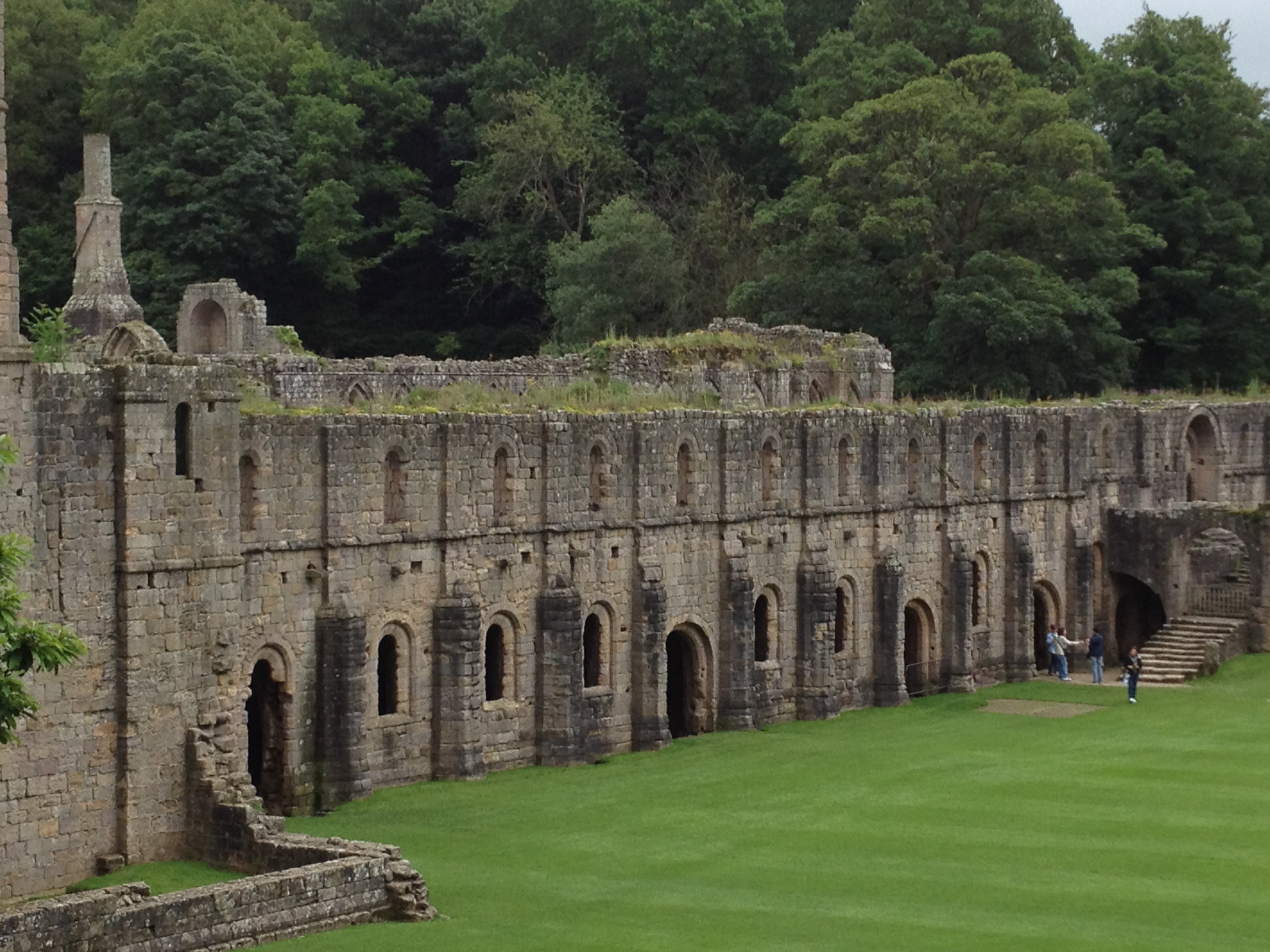
Note the people by the steps–they give you a sense of scale!
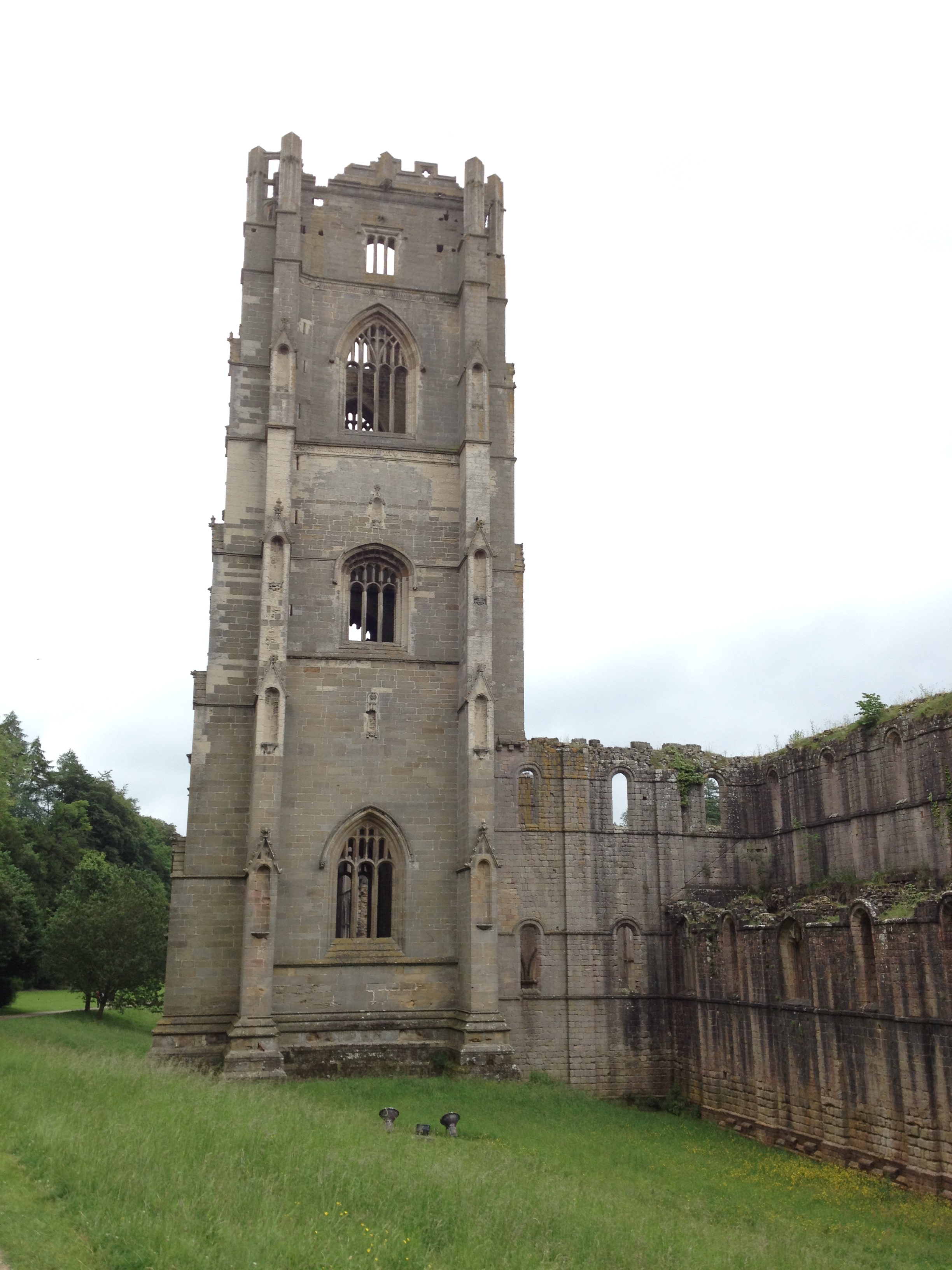
The tower of the north transept. It’s probably thirty feet to the bottom of the first window.
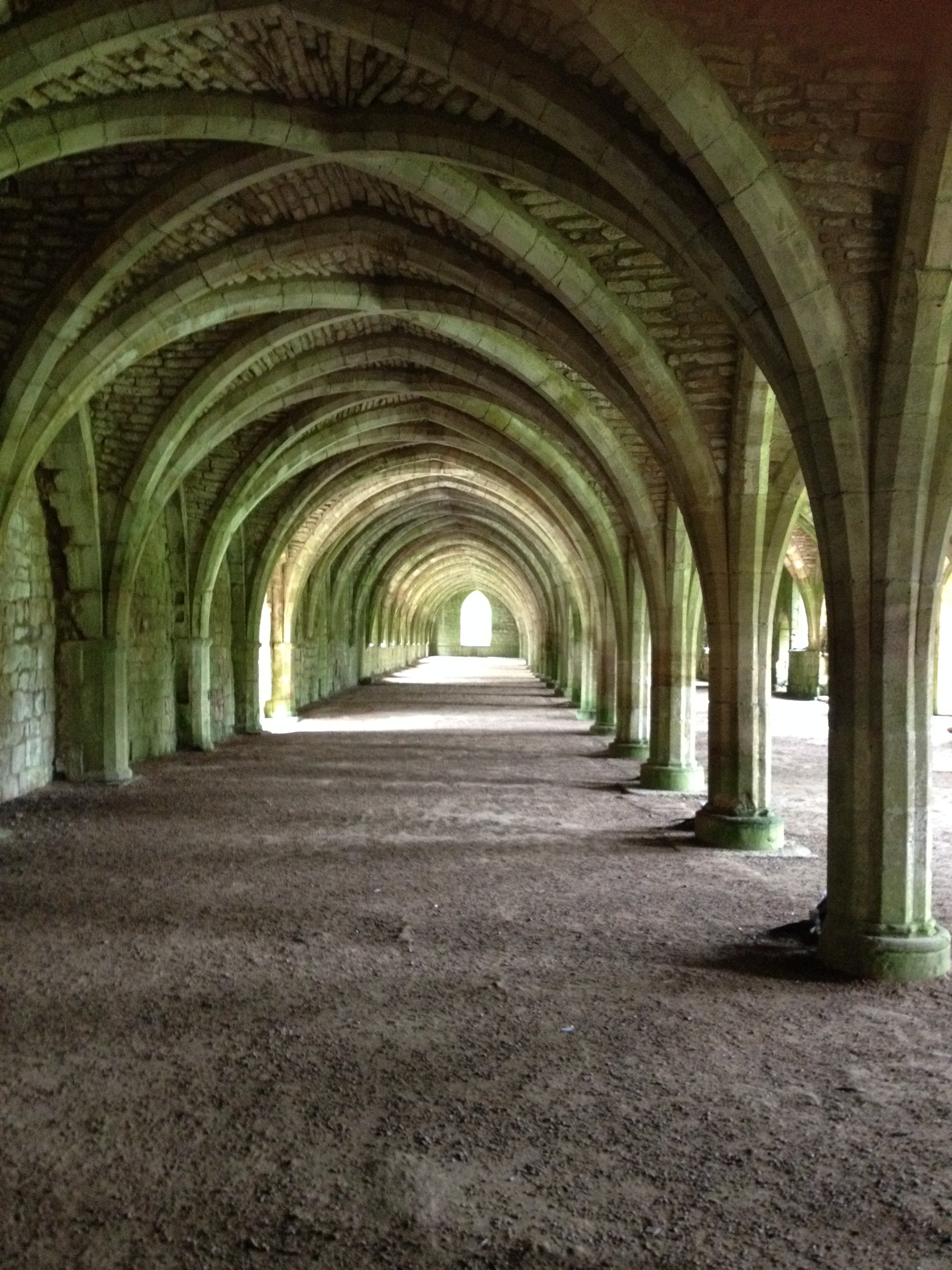
The cellar, where food and goods were stored. It’s actually twice this big–there’s another identical vault to the right.
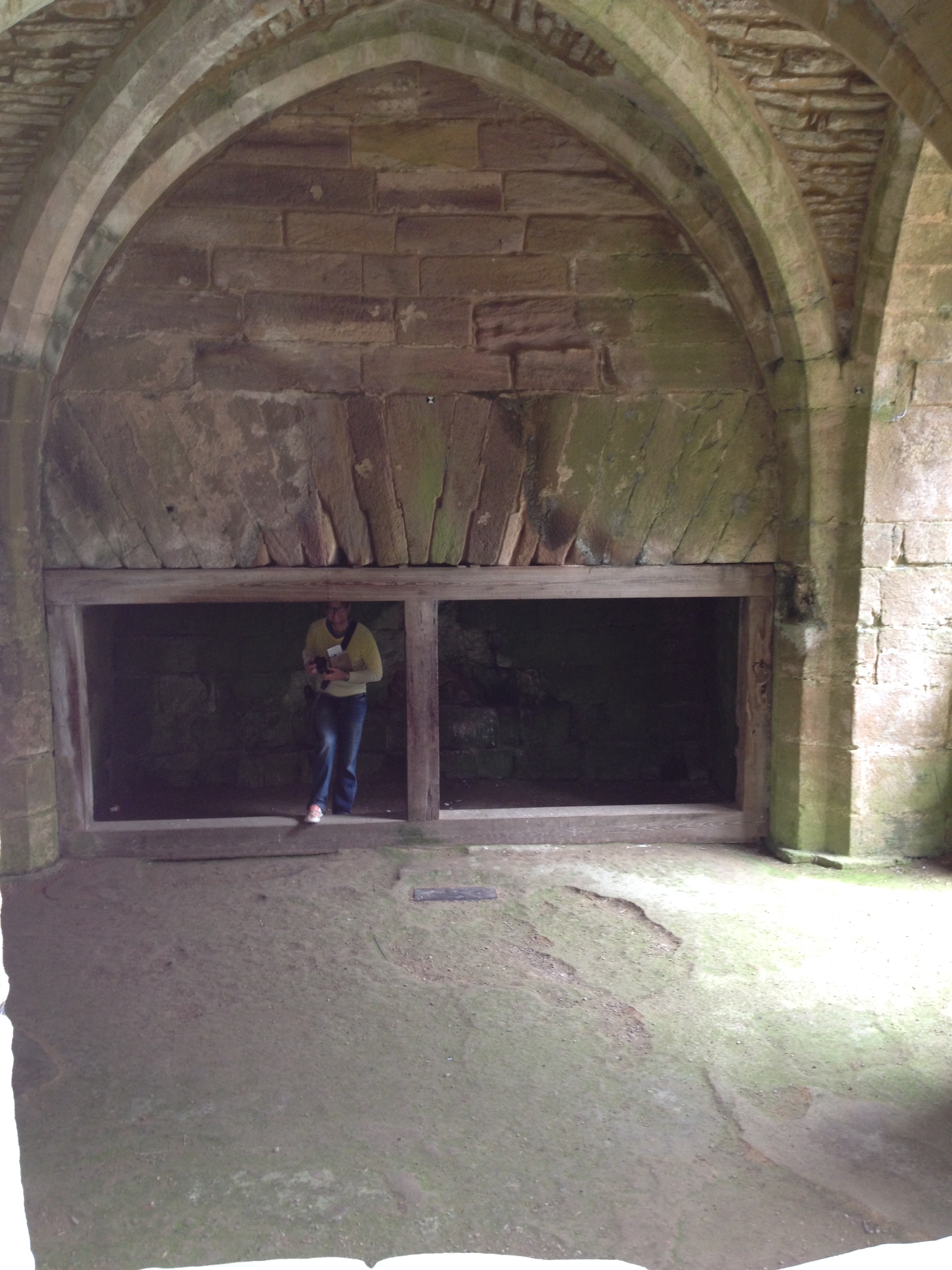
You need really big fireplaces to cook food for this many monks!
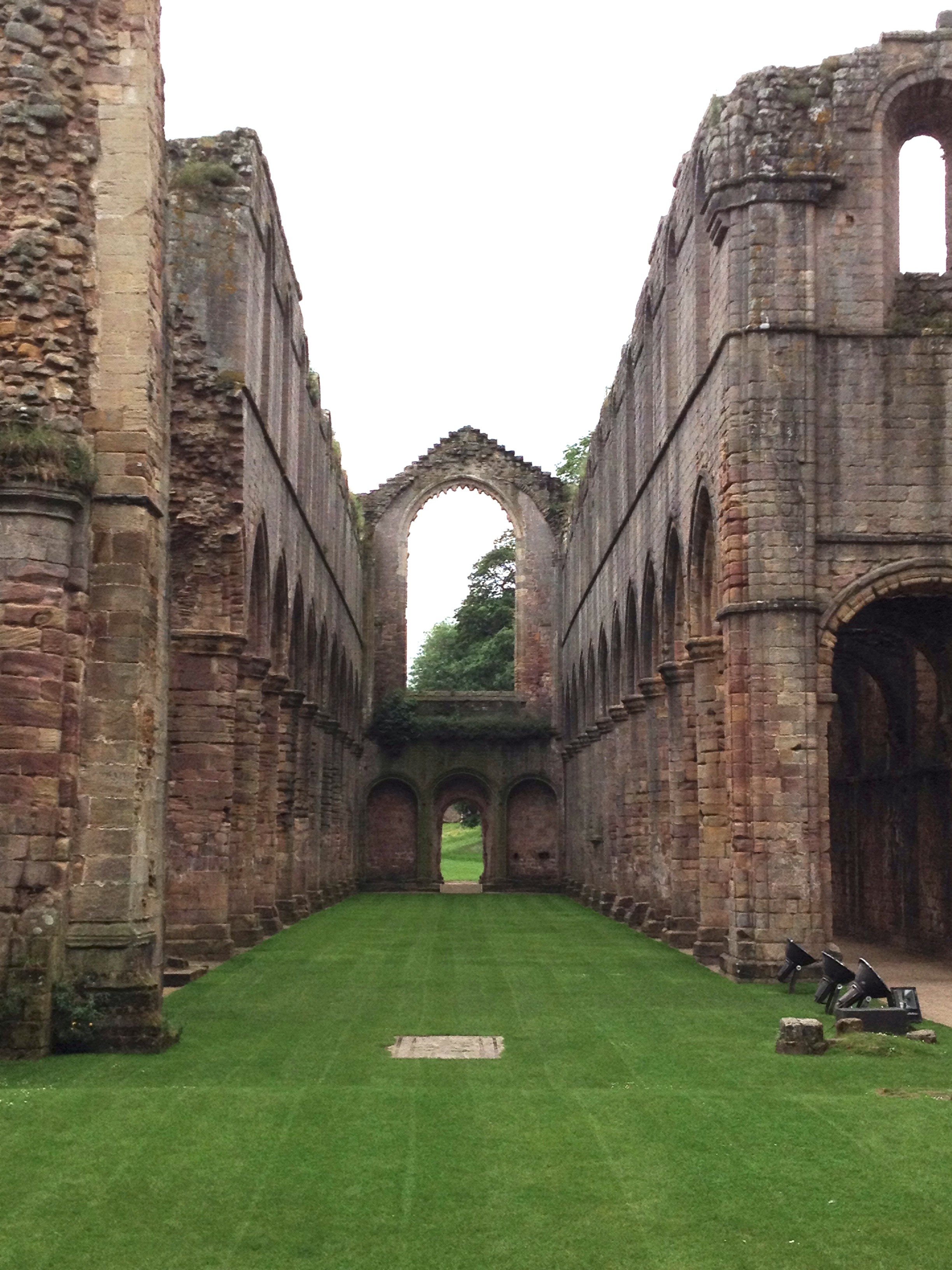
Standing in the crossing, looking down the nave.
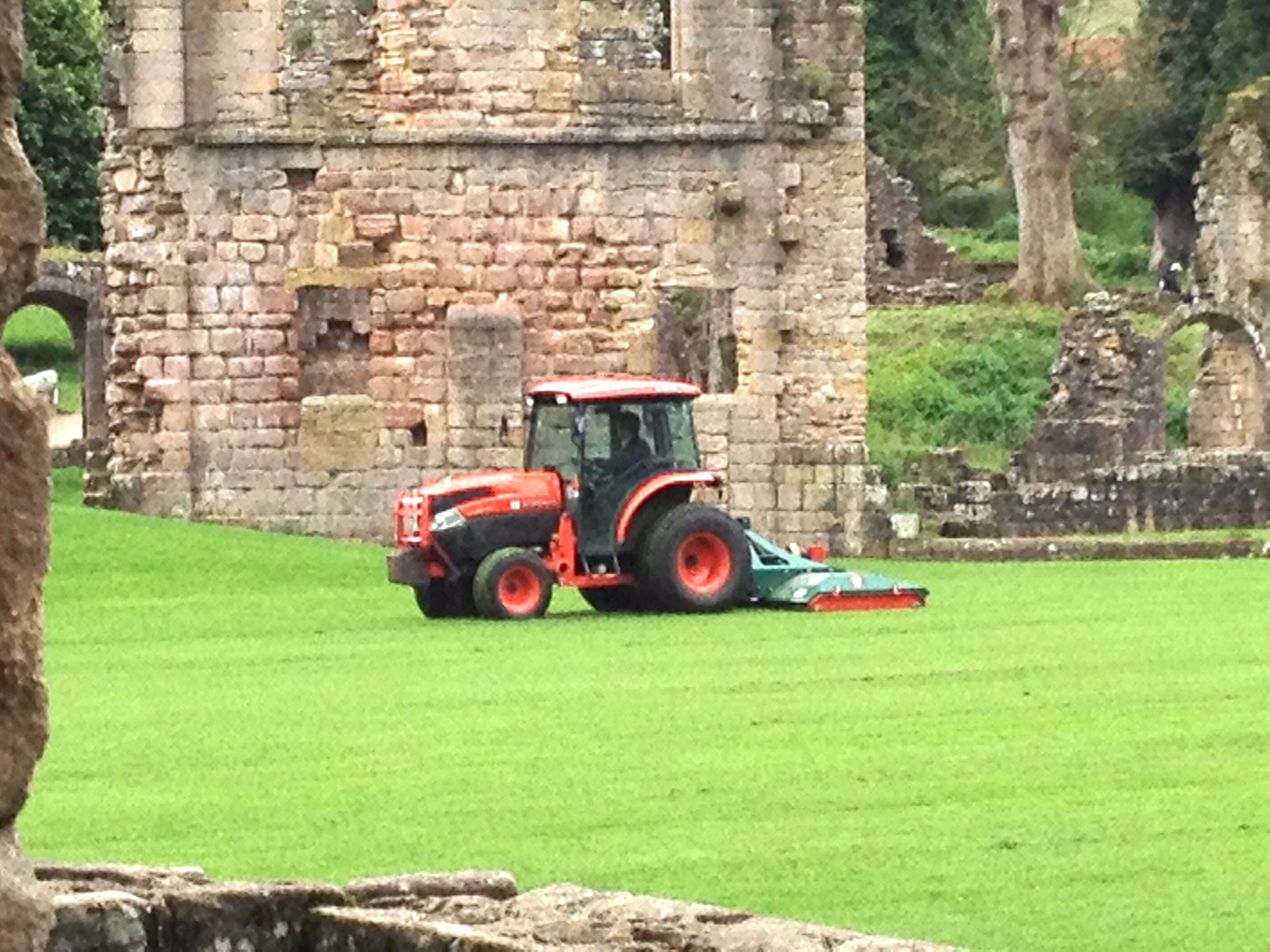
Mowing day. In the Middle Ages, they probably just let the sheep do this.
After stopping for lunch in Ripon (yes, that Ripon, the one where the ladies in Downtown Abbey are always going to shop), we found our way to Mt Grace, a Carthusian priory. Carthusians were a very ascetic order. Each monk actually lived more or less as a hermit, in his own cell. They only left their cells to worship together on Sundays. The layout of Mt Grace is very well preserved in the ruins–you can see where each monk’s cell and private garden were. In addition to praying the seven canonical hours each day, the monks also gardened and may have possibly engaged in other forms of labor. The reconstruction shows what each cell would have looked like–they are actually quite spacious and include a second storey and private fireplace. As Greg said, “by New York city apartment standards, these are luxurious!” You’ll notice the small windows by each door–lay brothers (men affiliated with the hour, but not fully initiated) would bring food around to the monks. The priory also sits on a beautiful piece of land–we were commenting on how quiet and peaceful life in this priory would have been, in contrast with life in or around a cathedral, which were always loud and busy.
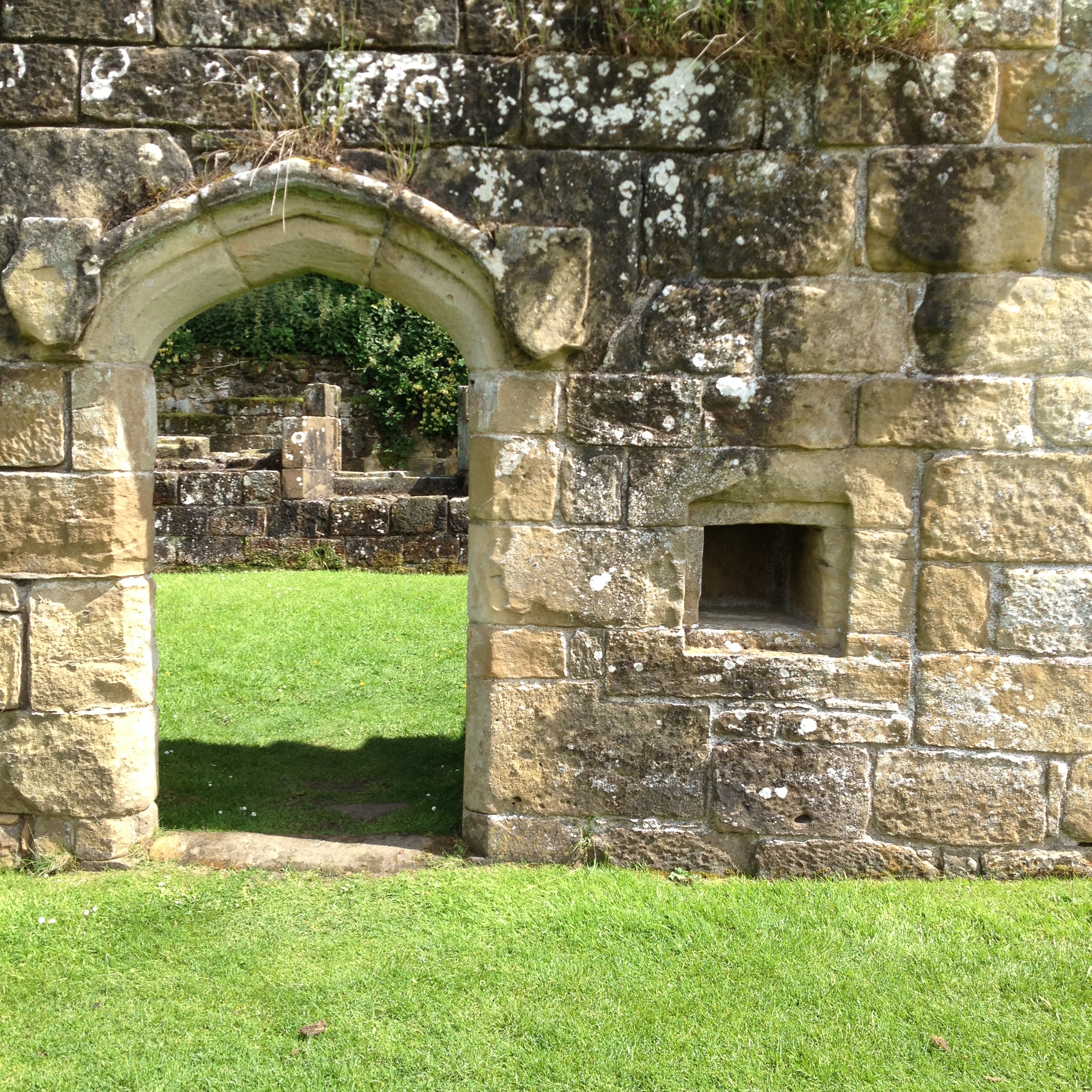
A doorway to a monk’s cell, with the window for food delivery to the right.
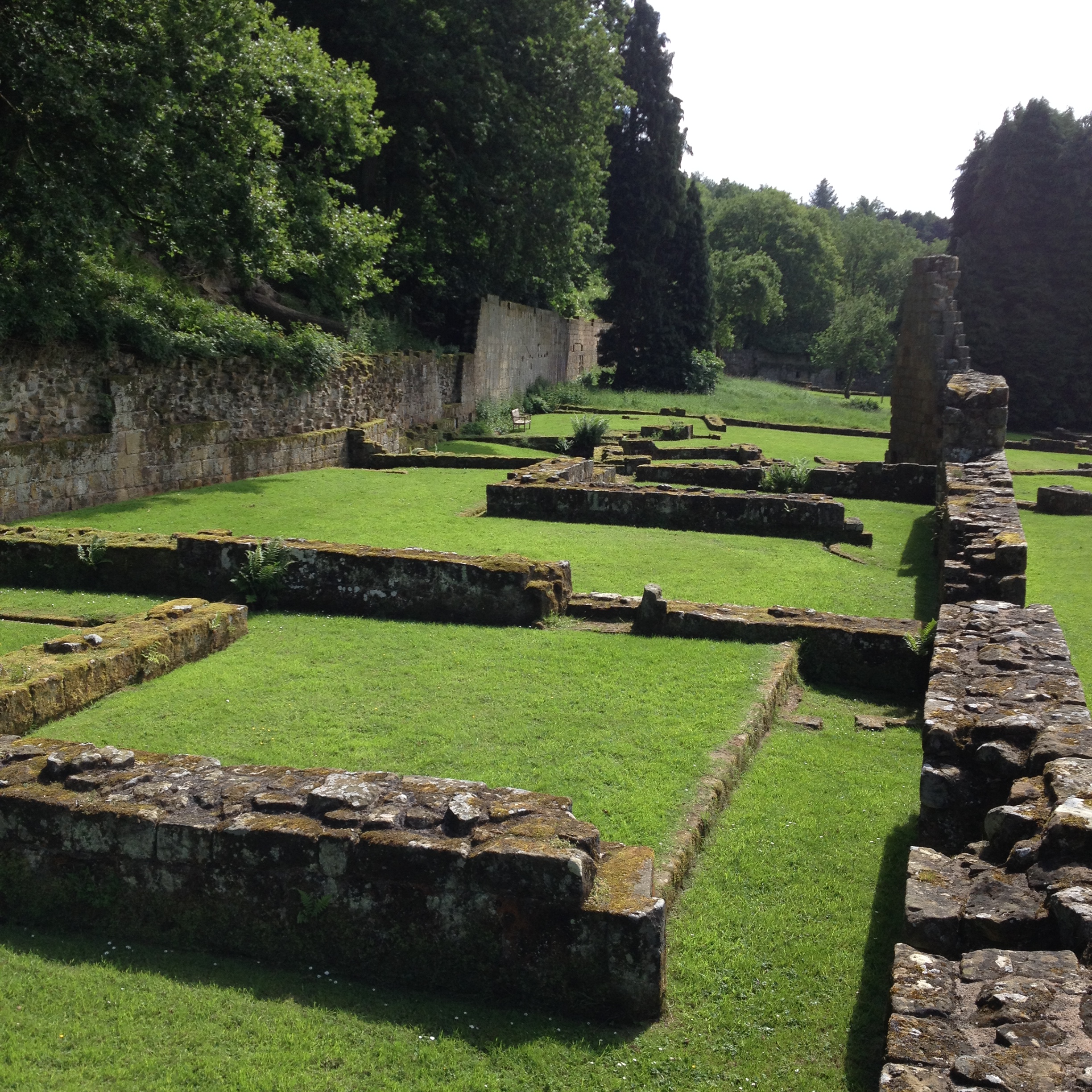
Looking down a row of cells and gardens.
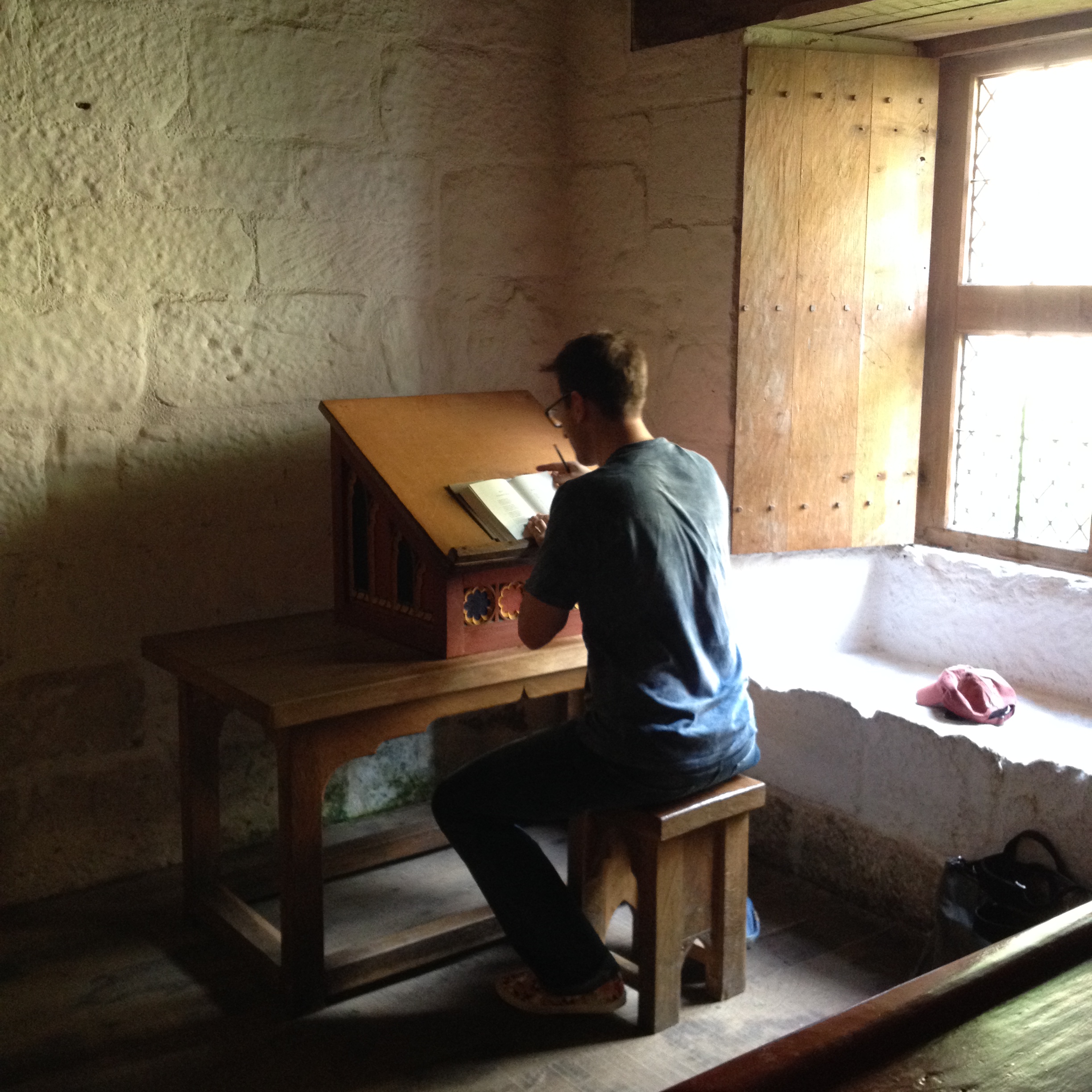
Steve reading Latin hymns while sitting in the reconstructed cell.
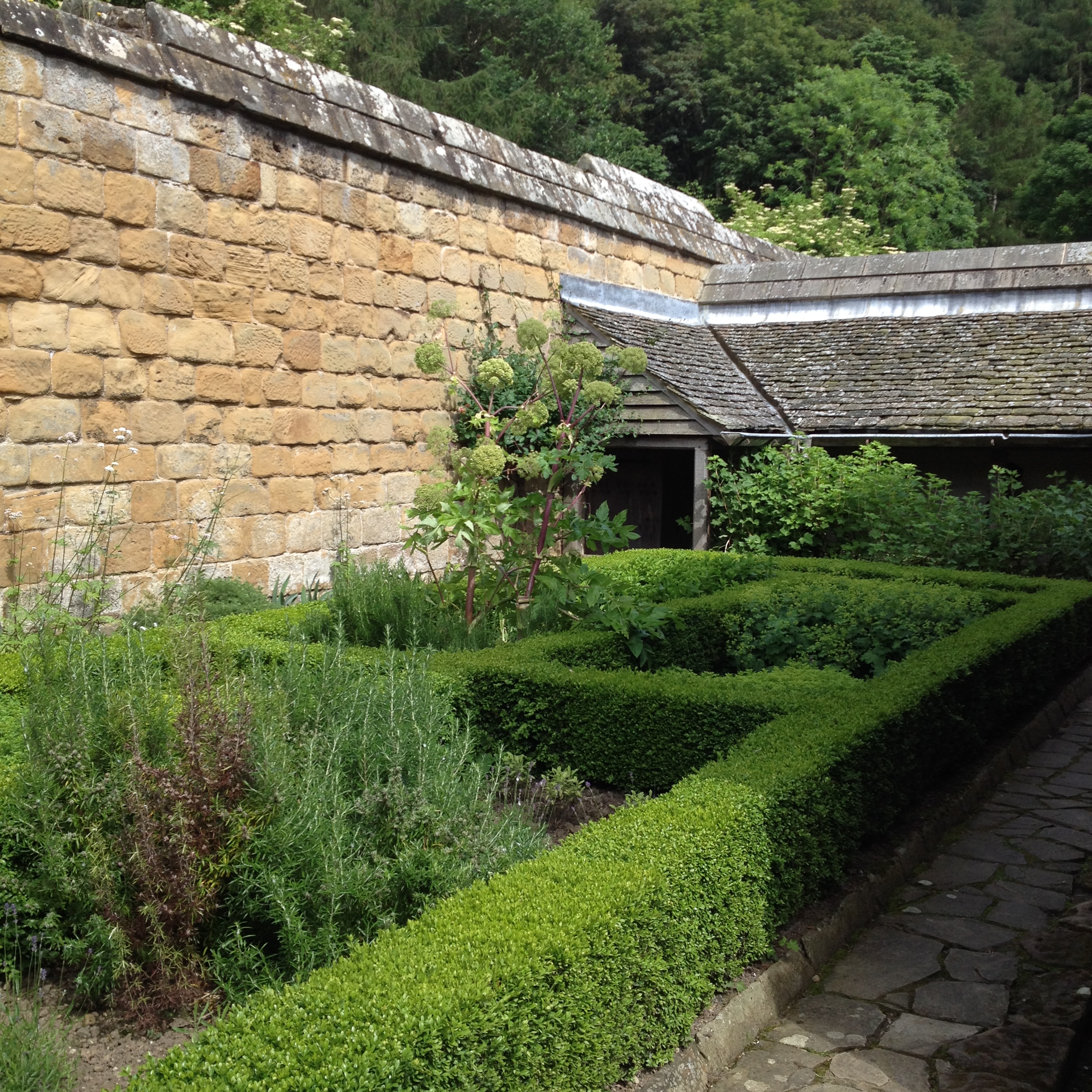
The reconstructed garden. I wouldn’t have wasted my space on box hedges had I been a Carthusian.
We then drove through North Moors national park, dodging sheep, quail, rabbits, and other cars, while stopping to admire the stunning views. It was gorgeous! The road was so narrow, and was dotted with cattle grates, which keep the sheep in their proper fields, and had a number of hairpin turns. But we made it, and arrived at Rievaulx. This is another Cistercian abbey, made famous both for its great wealth, and because St. Aelred was one of its abbots. Rievaulx is currently surrounded by sheep fields (as it probably was in the Middle Ages–English Cistercians were famous for the wool they produced). We got to see lambs running around, and spend the whole visit with a soundtrack of sheep bleating to one another.
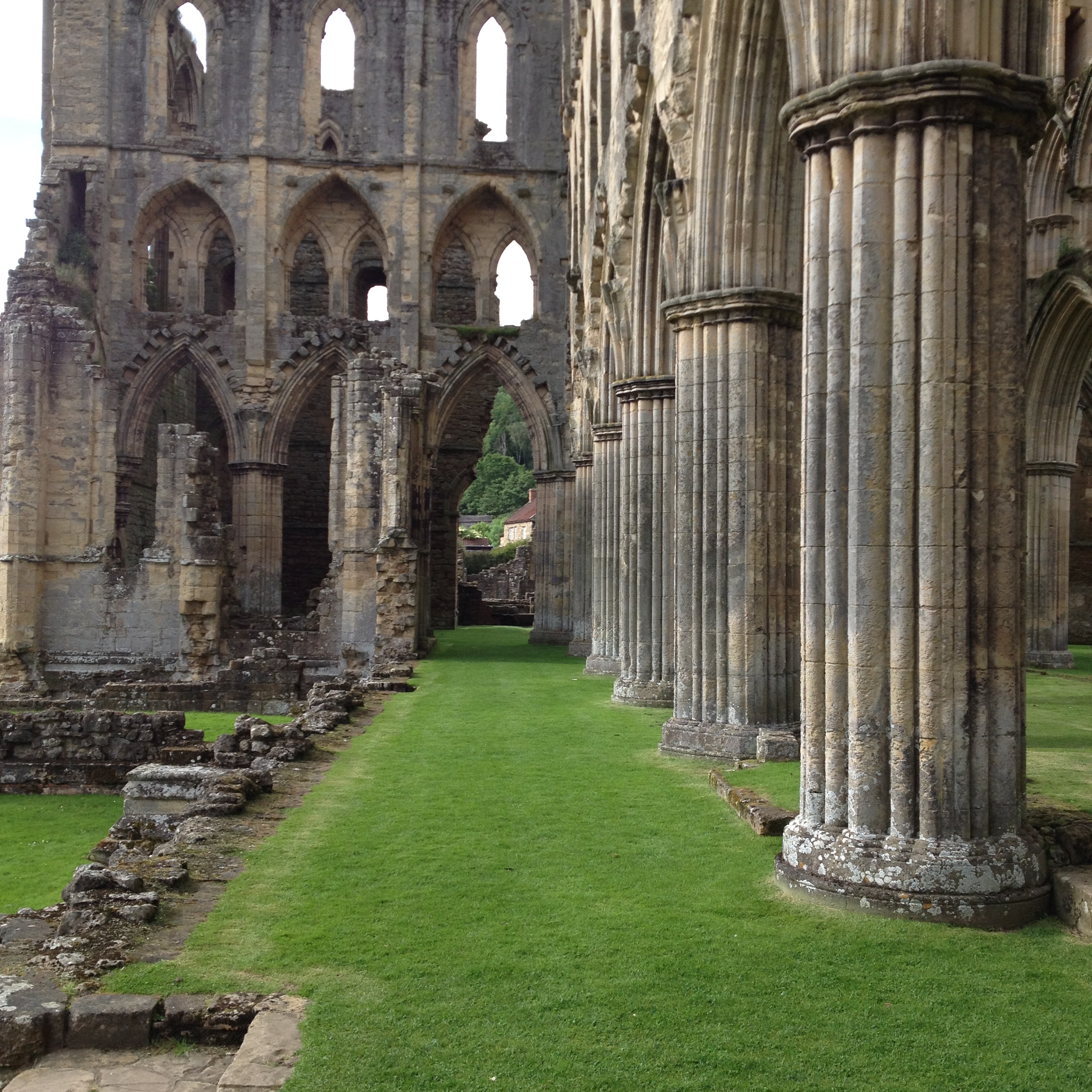
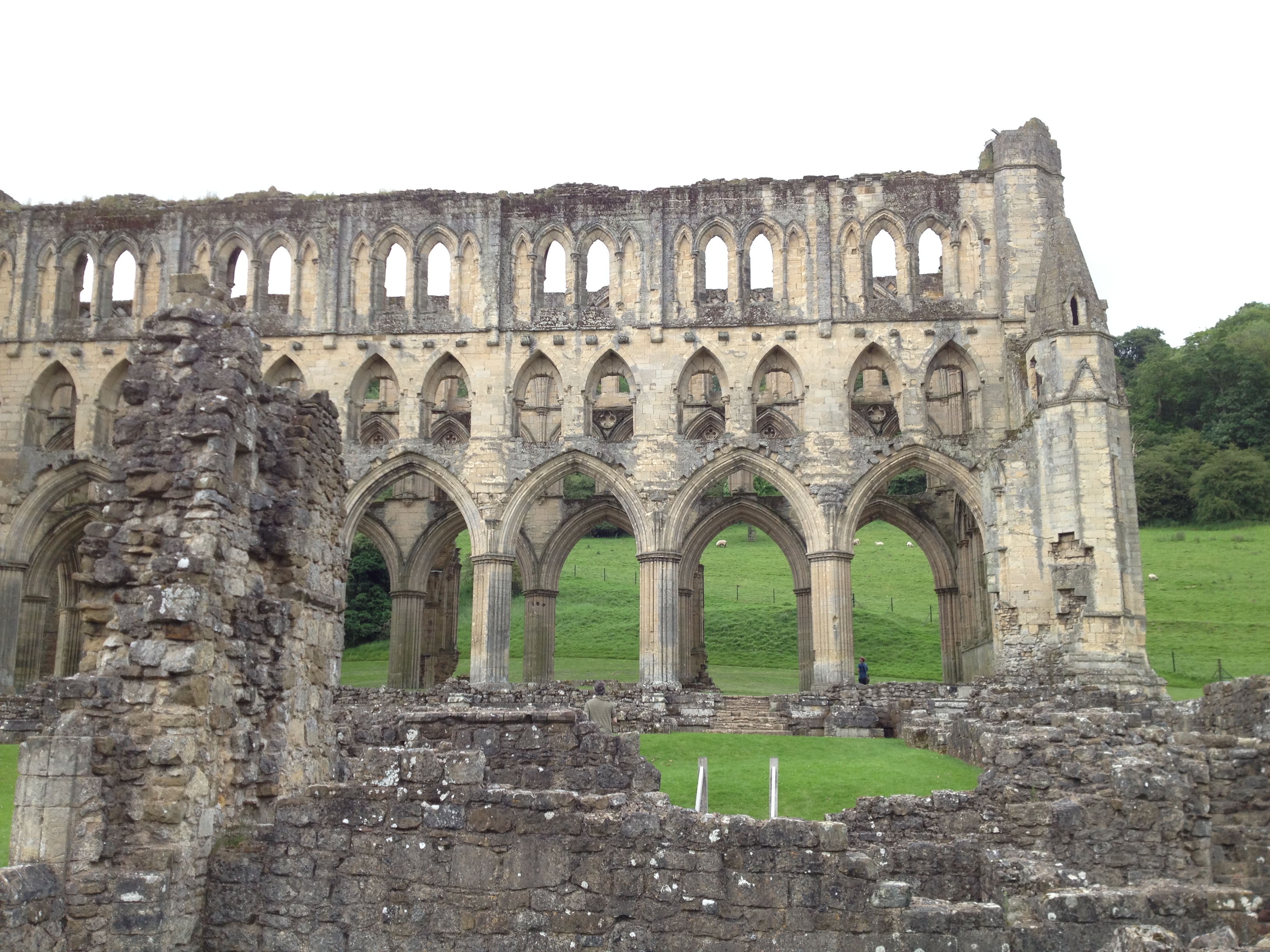
These huge pillars on either side of the chancel are Romanesque–the architectural form that preceded Gothic.
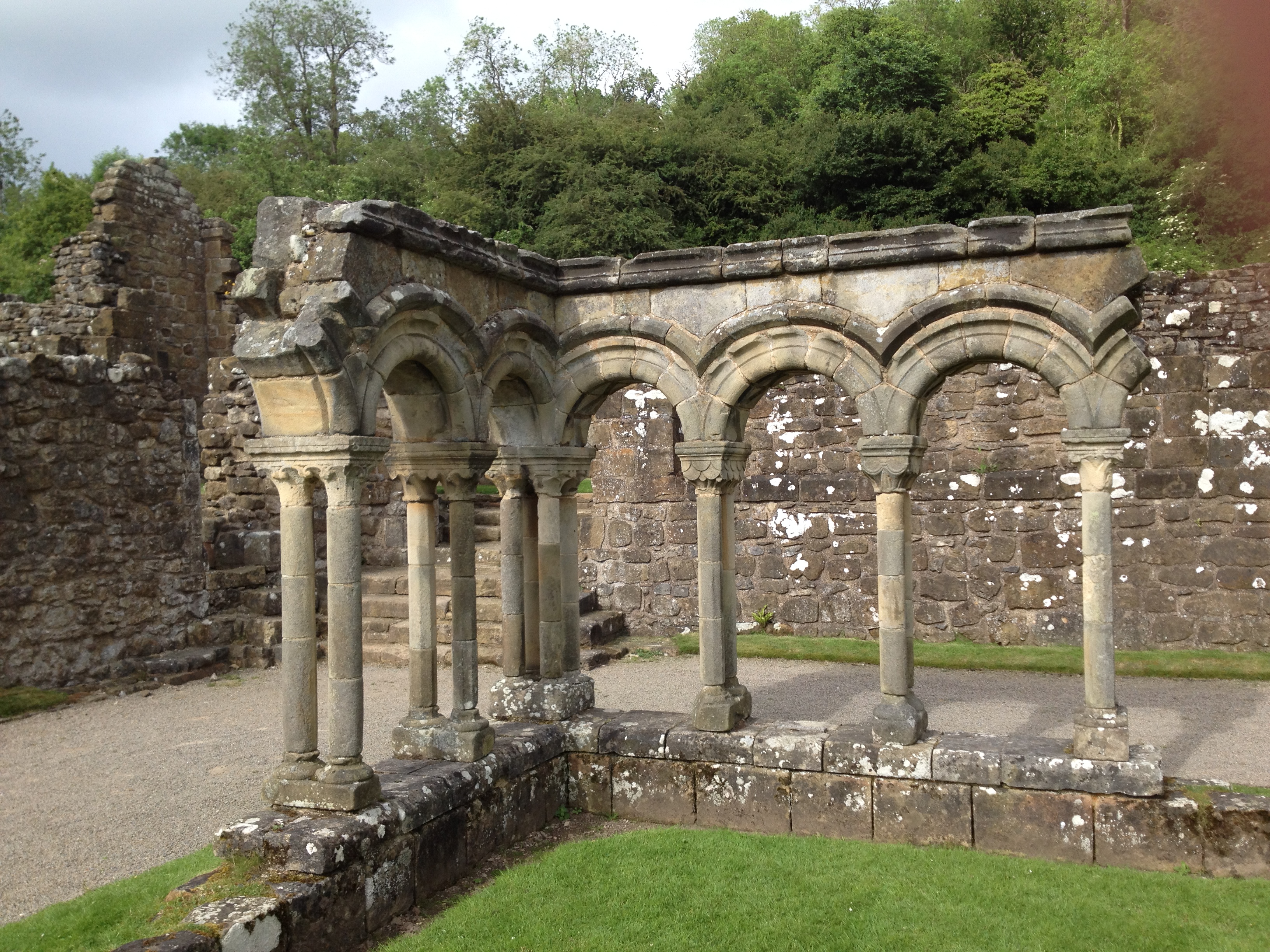
The only remaining piece of the cloister.
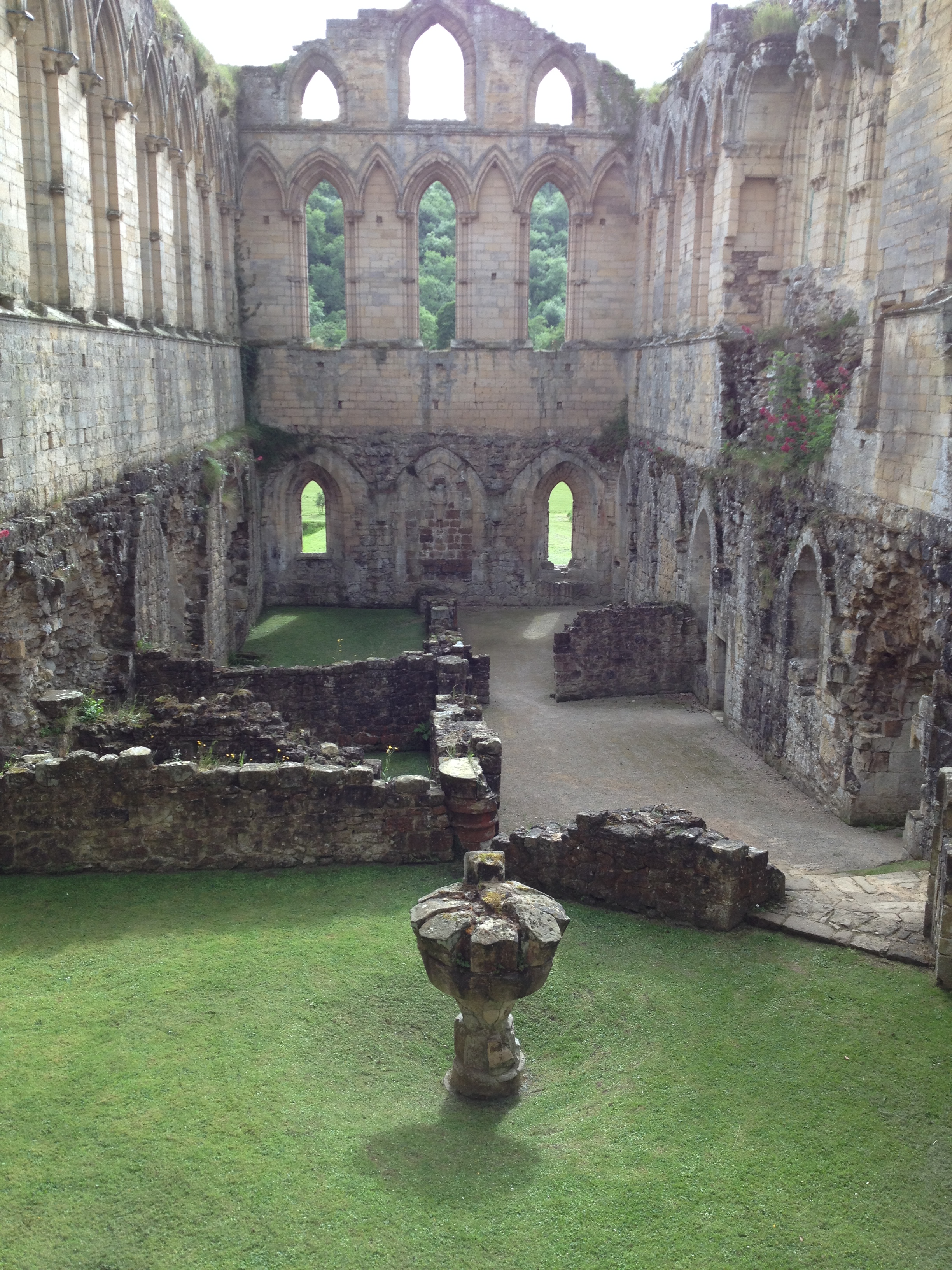
The refectory (i.e. cafeteria)
Steve has graciously posted some of his pictures here, if you have any more desire to look at images of ruins! (Kaley, note that there are a few pictures of people in these galleries!) Two other notes from the day: one, Leah sent me an adorable photo of William today, which warmed my heart. And, two, I bought William a”monastic bear” at the Mt Grace gift shop! It’s a stuffed bear in a brown robe and cowl–obviously a Franciscan, since Carthusians wore white, and Cistercians black and white. But still adorable and appropriate.
Comments are closed, but trackbacks and pingbacks are open.