Wednesday, June 11

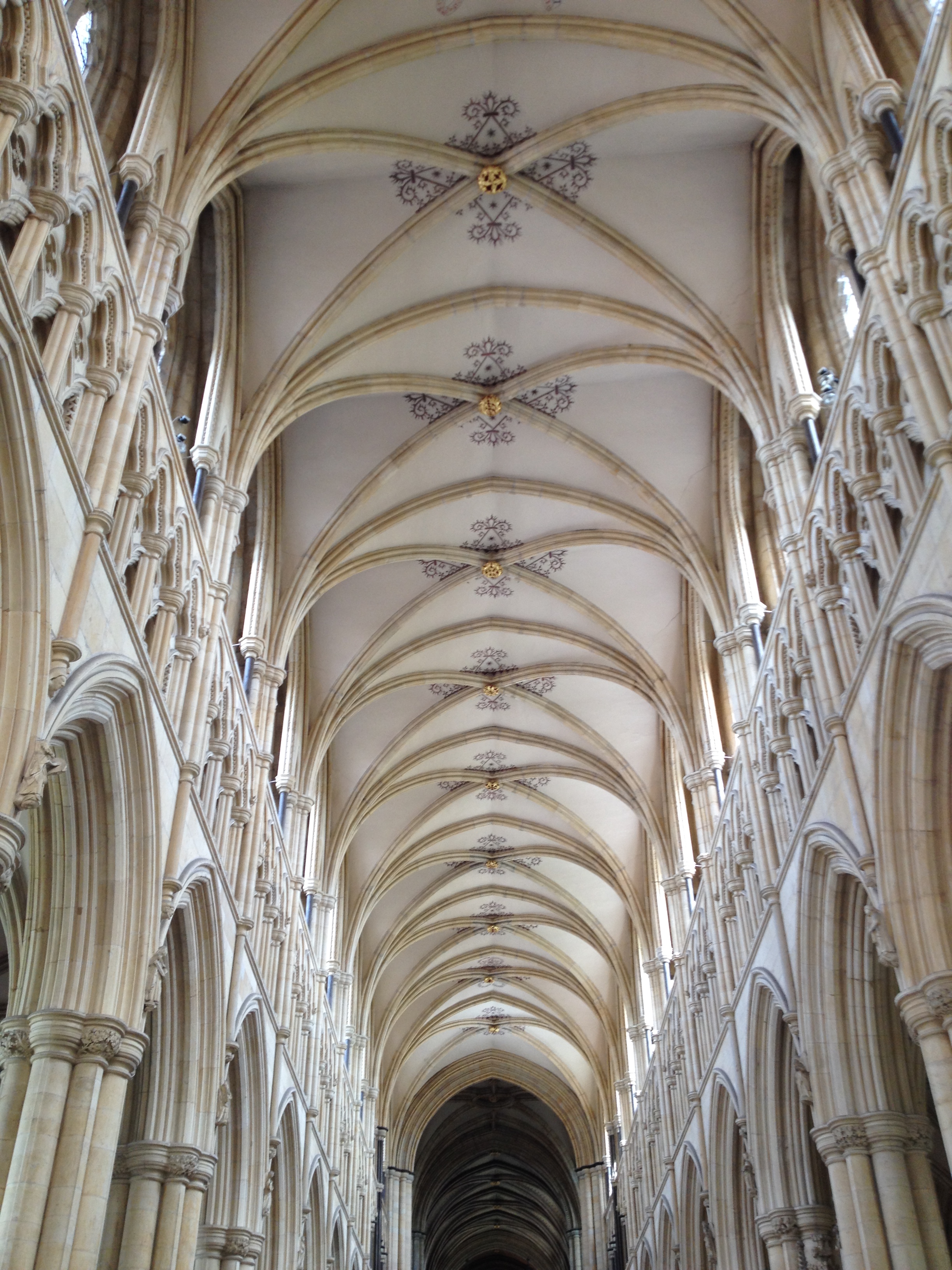
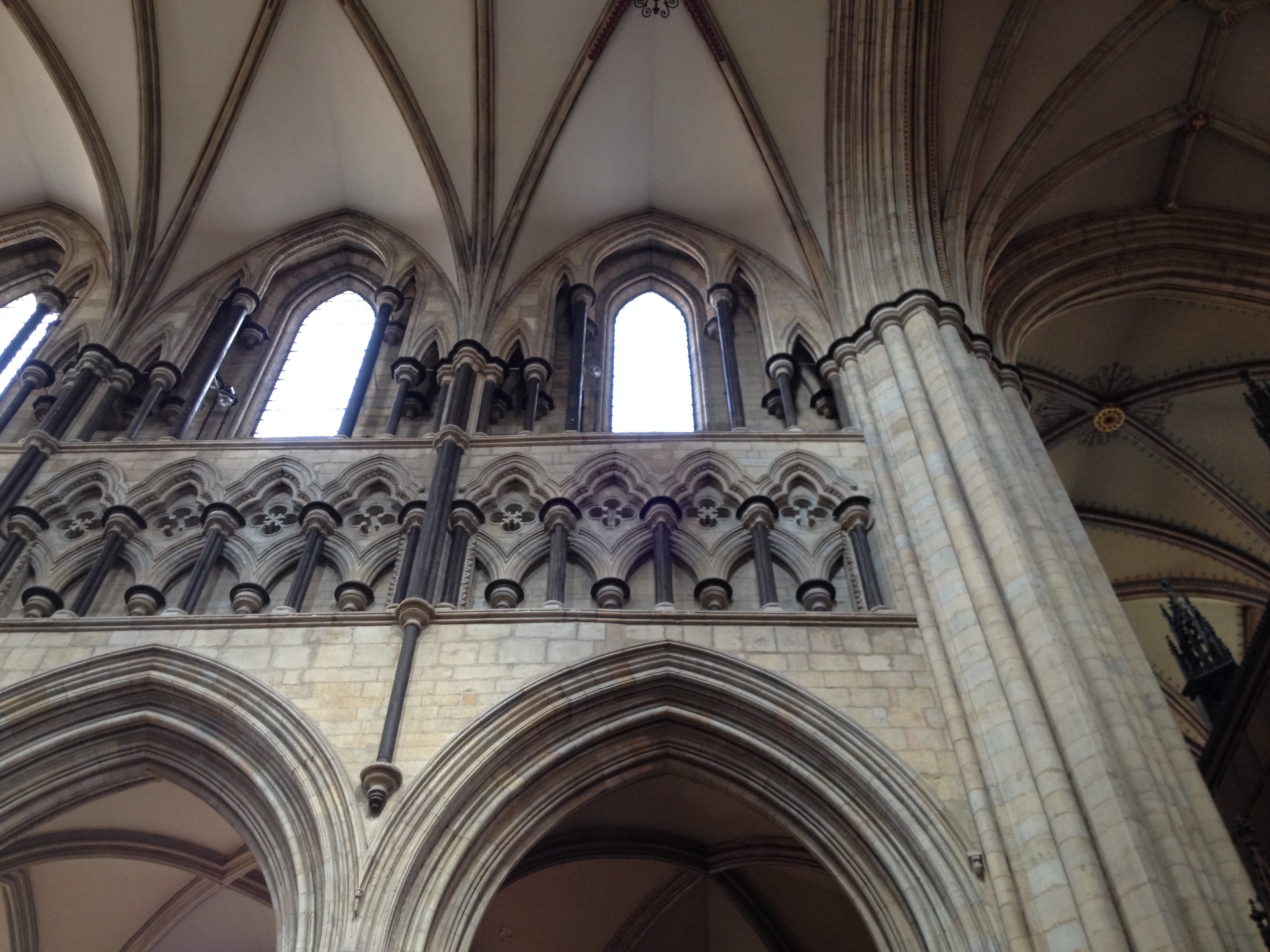
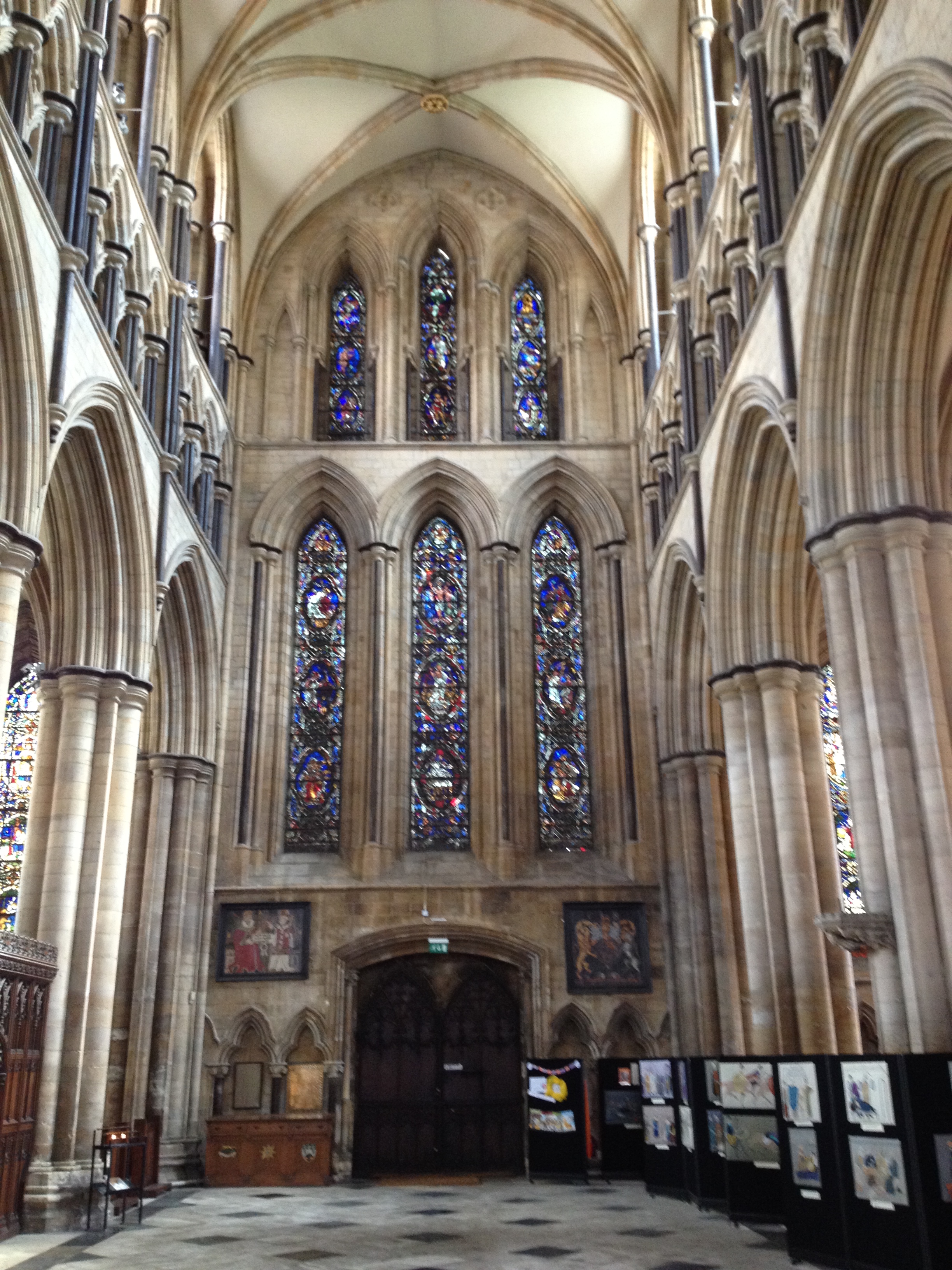
Today we got to visit the spectacular Beverley Minster—I think I liked it more than the York Minster. (The appendage of “minster” to a church name just means that it was a “teaching church”—there was a school attached.) Beverley is not, as I understand, a large town, though it is charming, so it’s a bit of a shock to find such a stunning and large church there. The church is so splendid because St John of Beverley, who was educated at Whitby by the Abbess Hild, founded a monastery nearby and is buried in the church, so it became a pilgrimage destination.

The outside of the church is striking because it contains so much statuary. (Most churches in England have very little statuary in or out, because the Protestants, and especially the seventeenth-century Puritans, were so zealous about taking it all down. So all over York Minster, you can see empty niches where statues would have stood.) At Beverley Minster, much of the statuary is new, but the feel of the church is still more medieval. They also had the most charming display of figures and heads, most of which seem to depict vices, on the south aisle—see my first three pictures.

The other super neat part of the church was the fact that we got to tour the towers. Beverley has an amazing tour guide named John, who has a lovely Yorkshire accent. He was christened and married in the minster; his daughter were christened and married there, and his granddaughters were christened there. So he has an investment in the building. At any rate, you have to climb 113 stairs to get up to the towers, and the stair case wraps around 7.5 times before arriving at the top. Here’s a picture of me before heading down! Per Heidi’s suggestion several years ago, I asked someone to come up behind me and leave me plenty of room so I didn’t get claustrophobic.

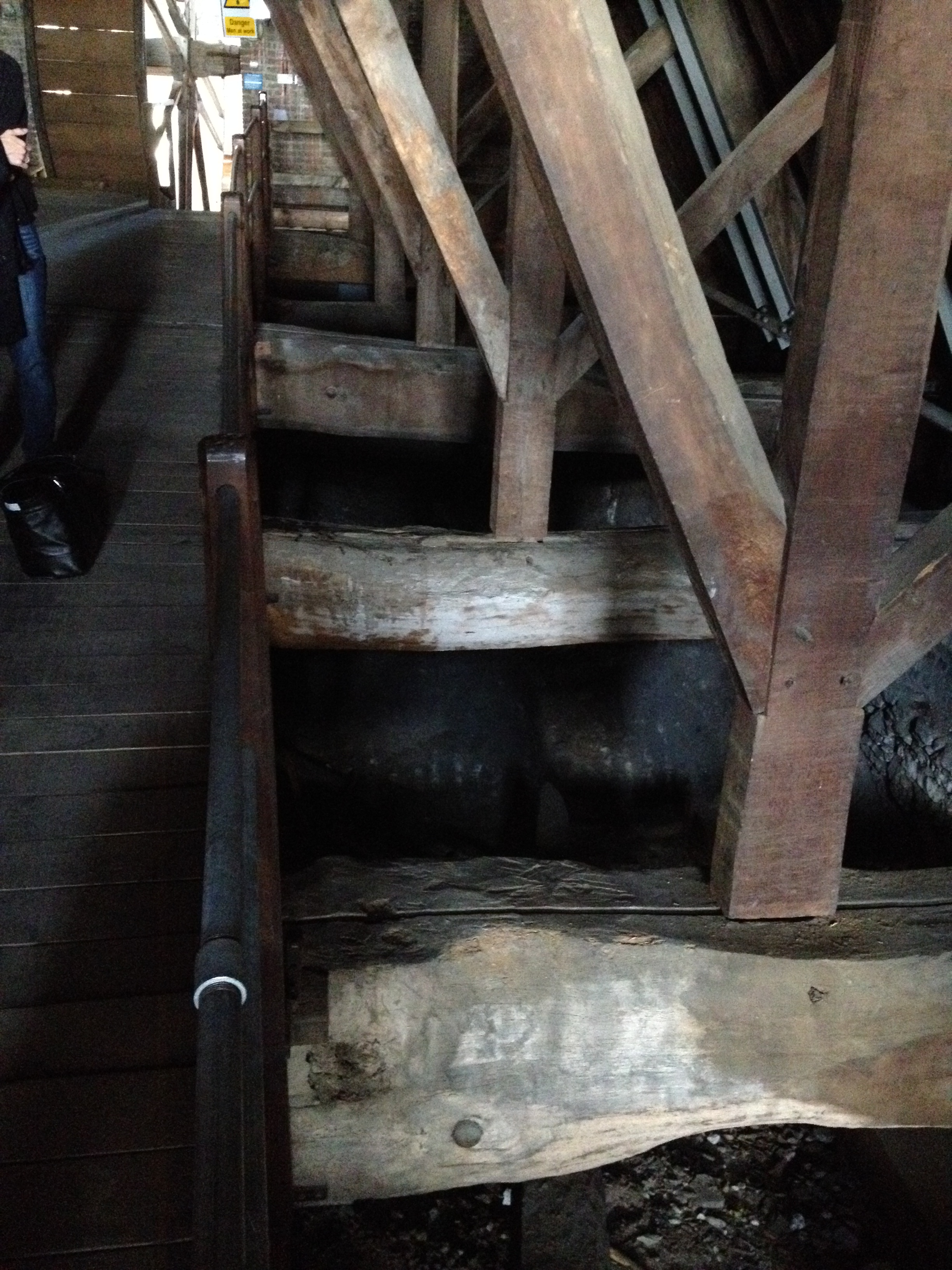
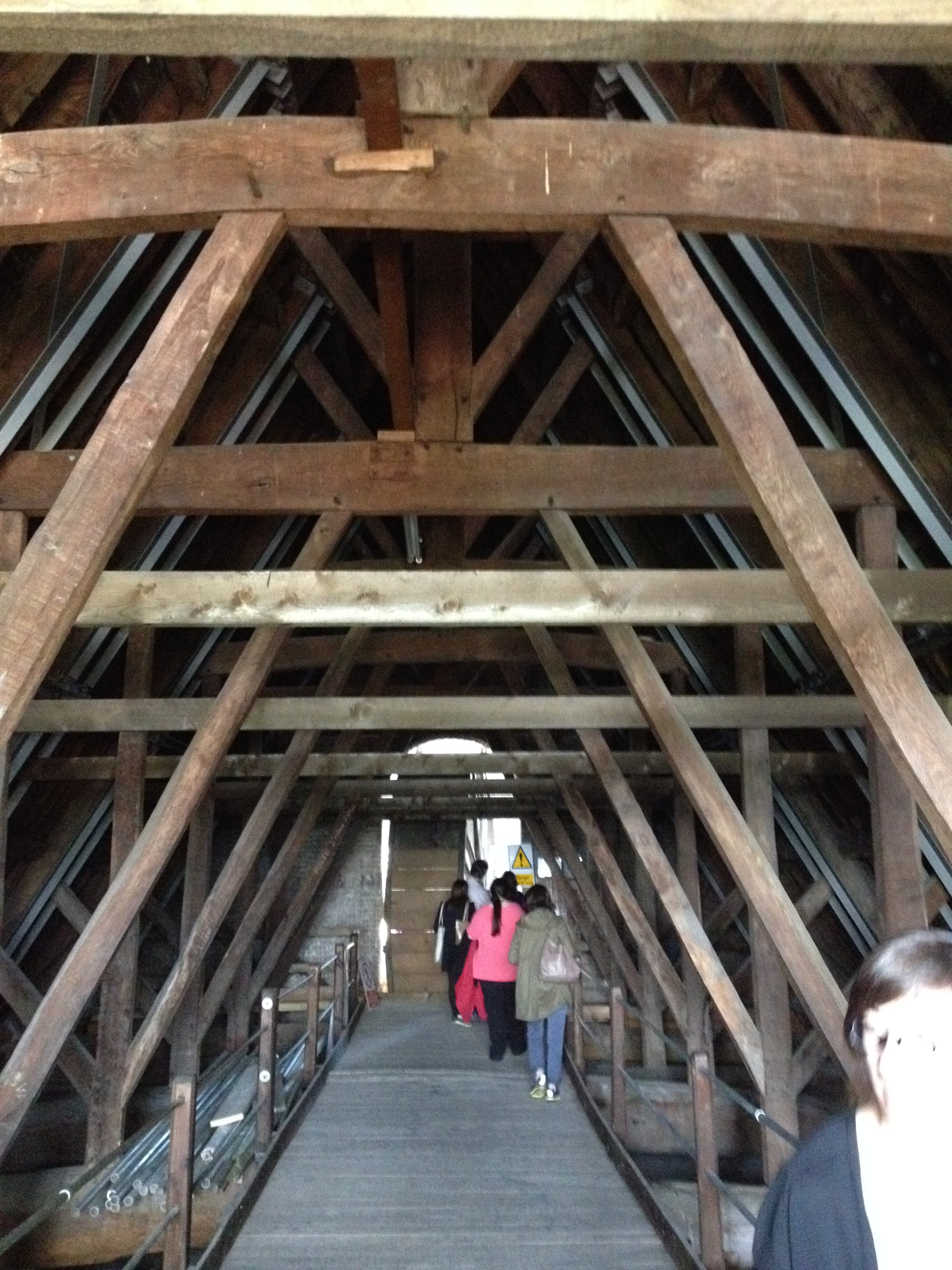
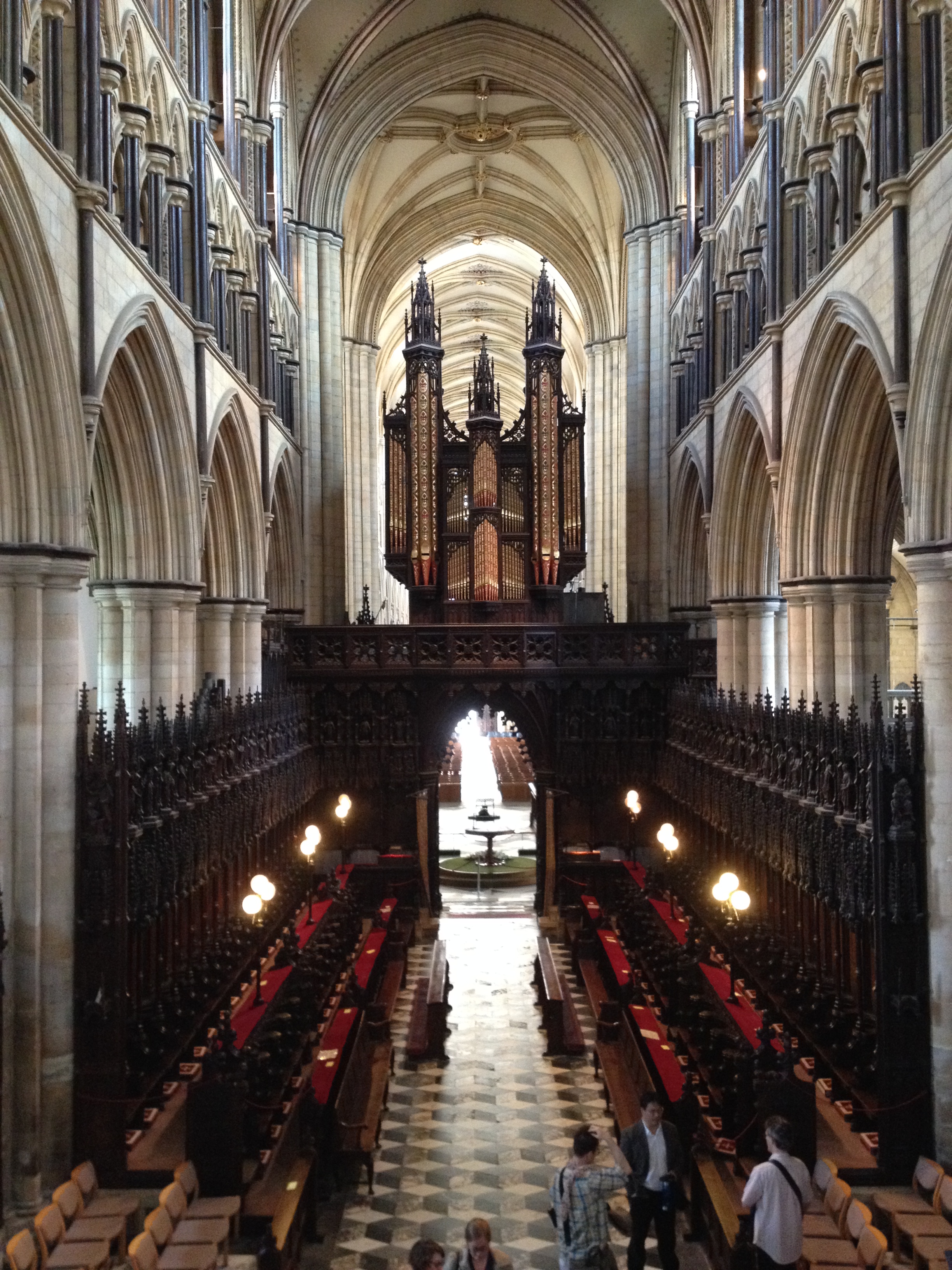
The climb up was totally worth it. The huge timber cross beams in the first picture were donated by Henry III in, I believe, 1348, to build the south tower. Crazy! You can see in my photo down the tower loft the timber structure, which has been reinforced in the last fifty years.  The other amazing part was the giant hamster wheel! The wheel is the old-fashioned medieval way of raising pieces of the ceiling, such as the giant boss you can see in the next photo. (Bosses are the painted bits at the intersections of vaulting ribs. They don’t look that big from the ground, but as you can see here, they are quite large!) Through the hole in the roof where the boss was, we got to look down on the choir and the organ, and the floor looks 3D. From the tower, we also got to see how folks have, over the years, left graffiti on the window. My picture below isn’t as clear, but you can make out a plane—there’s an RAF base near the church, and the man who last put new glass in the window was working through the second World War.

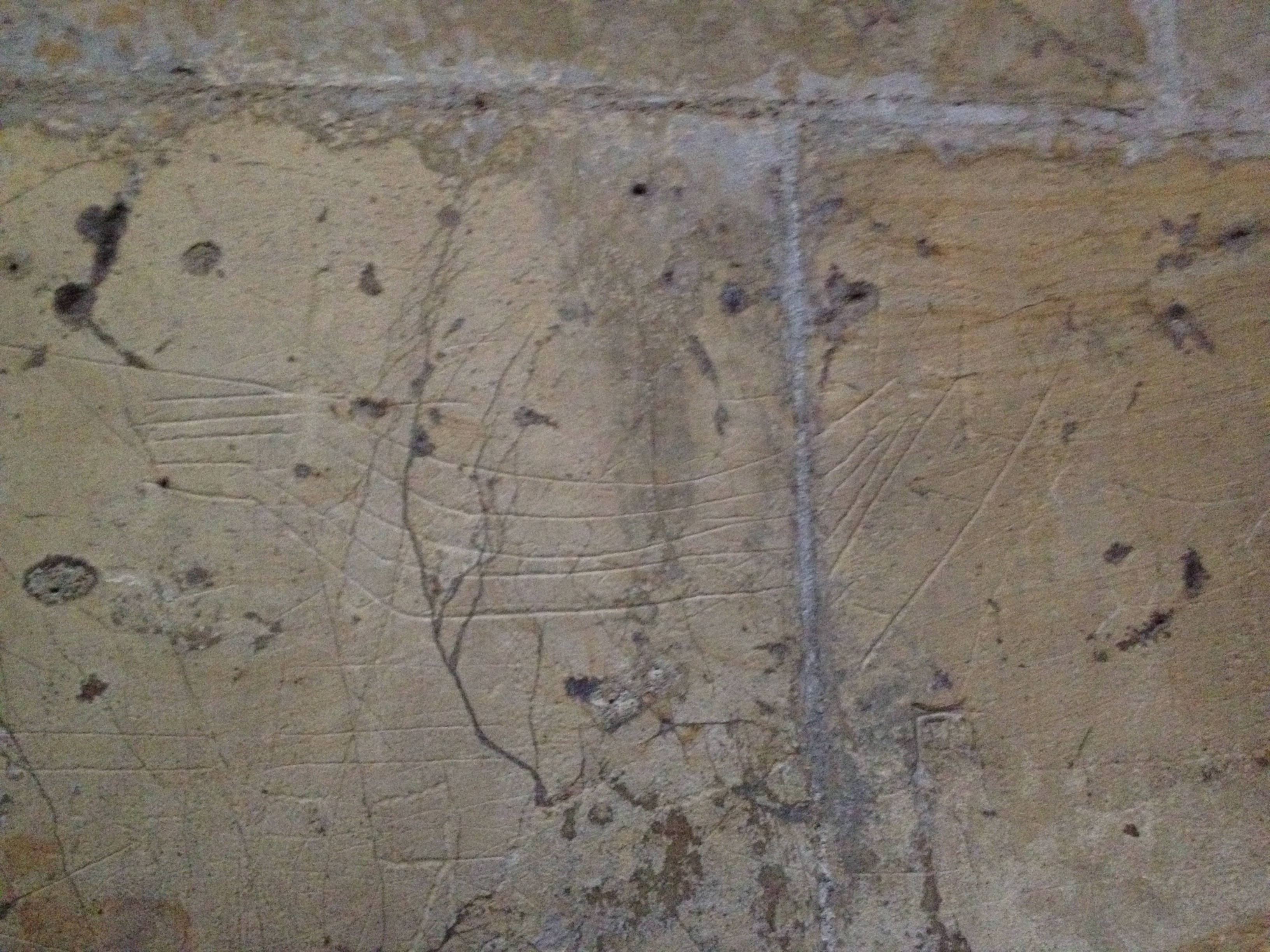
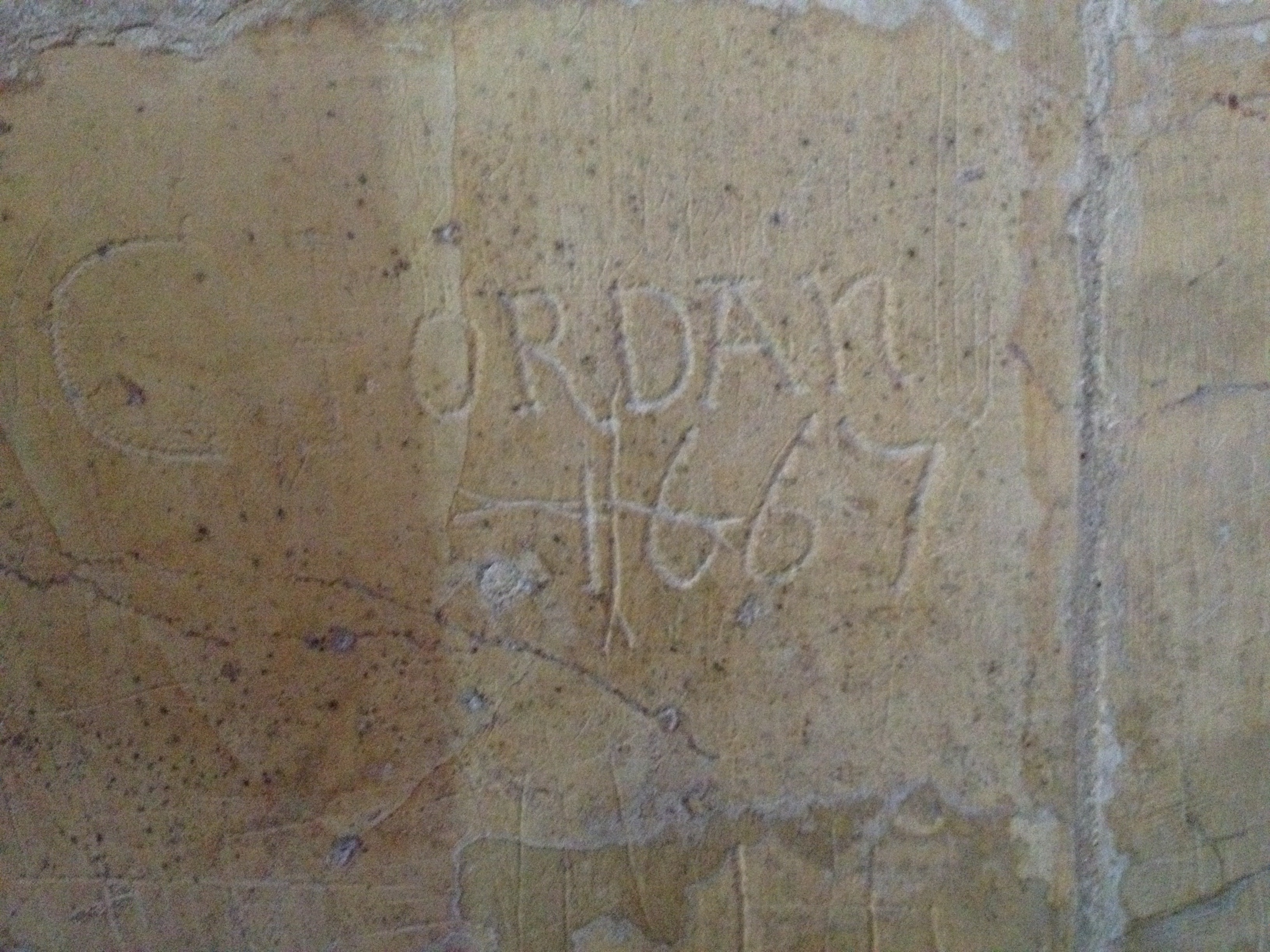
Speaking of graffiti…here’s some pilgrim graffiti! Pilgrims to the shrine of St John left these marks. There’s a cross and what was clearly meant to be a ship. They left these on the back side of the shrine—John (our tour guide) liked us so much, and was so delighted with our in-depth interest in the church, that he let us on top of the shrine! He said he hasn’t done something like that in fourteen years. The last photo is the one I took from up top.
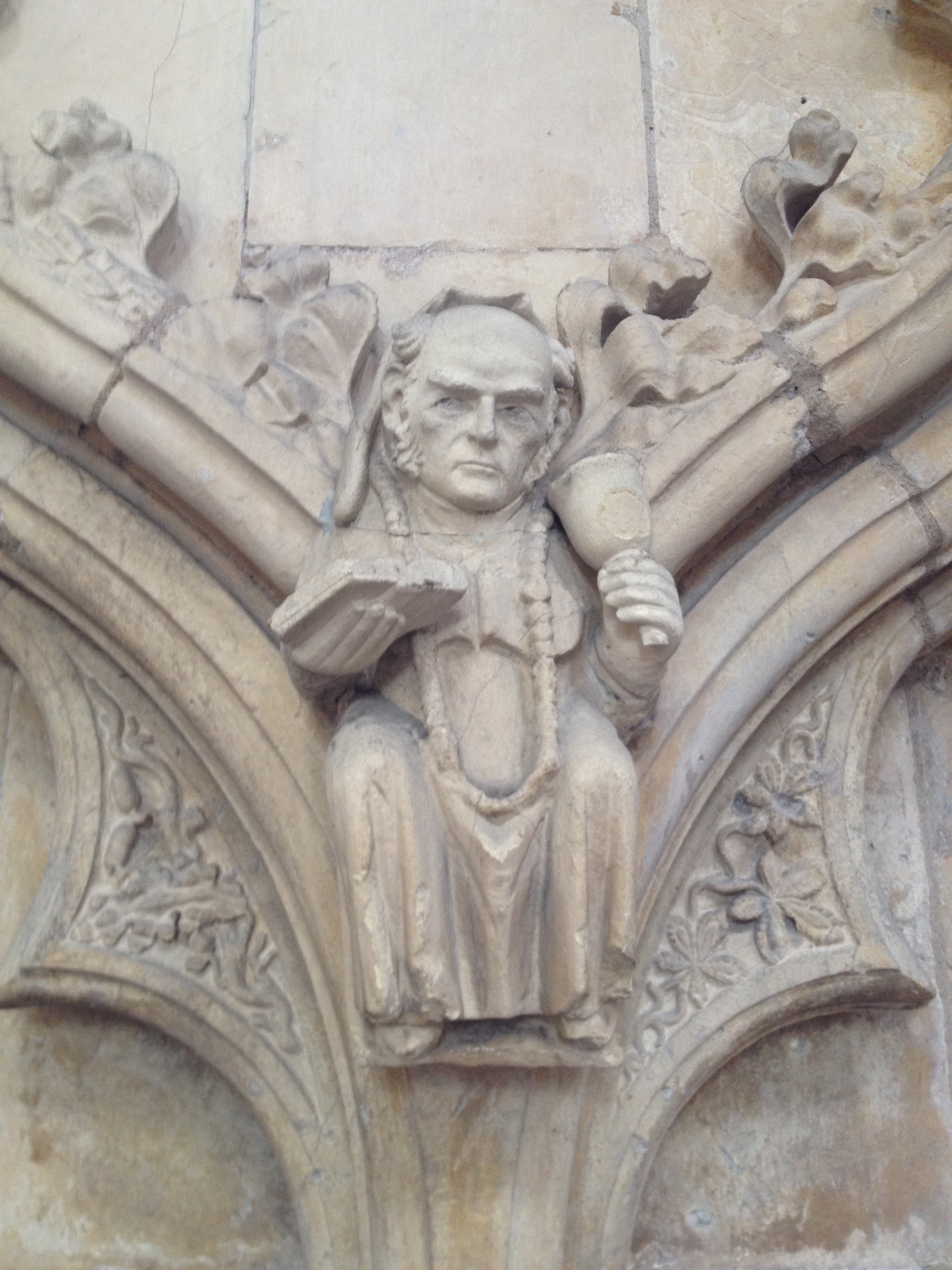
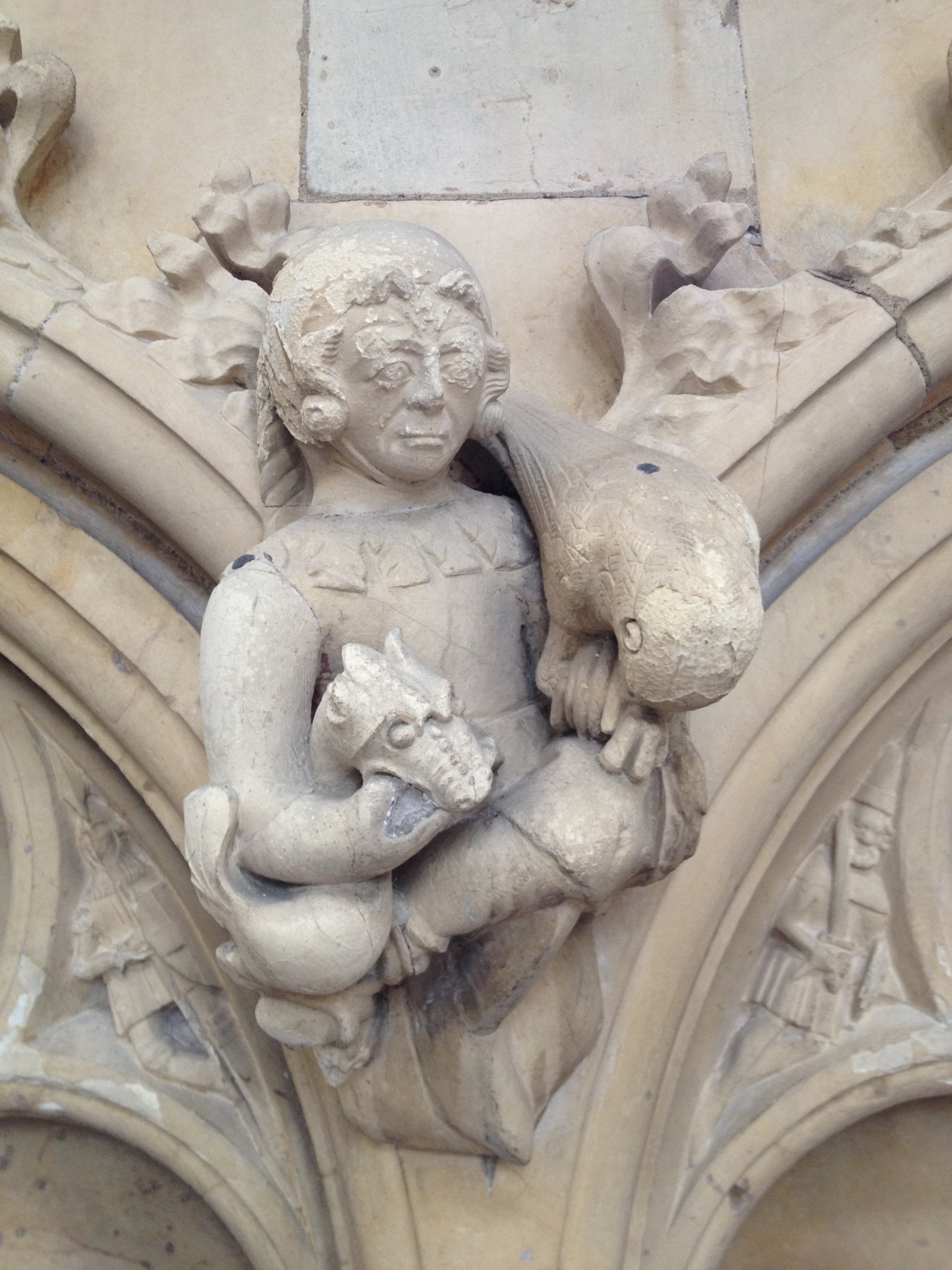
York NEH 325 York NEH 326 York NEH 327 York NEH 328 York NEH 330 York NEH 333 York NEH 334 York NEH 366 York NEH 367 York NEH 374


After a long afternoon at the Minster, we headed into Beverley for dinner. We found a local pub that seemed to be the place to meet–everyone from family’s with young children to elderly couples to twenty somethings were eating there. The bartenders both looked to be about 17, and they were rather confused by the amount of detail in our questions about their beer. I had a Sneck Lifter from Jennings Brewery–the bartender told me it was an ESB, but it’s actually a dark strong ale.


Tuesday, June 10

Another big day, despite the fact that today was supposed to be our first “free” day. I got up early to go to morning prayer at the Minster, since I was feeling a bit at loose ends on Monday night. The Minster is, unsurprisingly, very high Anglican worship, though they do use Common Worship, the Church of England’s update to the Book of Common Prayer. At any rate, the priest introduced himself at the end (I can only assume I was one of the seven people in the room who isn’t a regular). We chatted for a minute, and when I asked him for a coffee shop recommendation on my way out, he invited me to his house for breakfast! He and his wife live on the Minster grounds, and they were both beyond lovely and welcoming. They made me toast and coffee (real coffee! not instant!), and invited me back for dinner on Friday. (I feel that I am making Heidi, Cindy R, and Josh proud with the way I am chatting up people I don’t know at all. This is so not like me.)

We spent the first part of the morning in the Minster with Sarah Blick, one of our seminar organizers, getting a thorough overview of gothic architecture. More on this later—I will just say that it was lovely.

This afternoon, we had an opportunity to see St Martin-cum-Gregory (yes, that’s its name), a parish church that is in a rather severe state of disrepair. But it has an interesting history—you can see the footprint of what was probably the original Anglo-Saxon church, and which seems to have reused stone that from the Roman city. In the link, you can notice how the stone above the arches smooths out—it’s a different building phase, and a different kind of stone. The church was possibly built on top of Roman temples. (The Minster is built on top of the Roman praetoria, the fort.) The initial church, probably just a rectangle, was heightened by the addition of a clerestory, and lengthened by the addition of a chancel, and then eventually to chapel/aisles were added on to the sides. What’s so interesting is that you can see the way in which the church is “cobbled” together, with very different types of stone being used at different points in the building process. The two aisles are noticeably asymmetrical, which is part of how you can tell they were added at different times.

For the medievalists, one of the side aisles was probably a Lady Chapel, sponsored by local guilds, and the other was sponsored by the Scrope family. For the non-medievalists: Richard Scrope was the archbishop of York right up until he participated in a plot to overthrow Henry the IV (who had just deposed Richard II…). Henry had Scrope’s head chopped off and put on a pike at the city gates, as a reminder to all who entered that even archepiscopal privilege can’t protect you if you try to overthrow the king. The archeologist we were talking with was positing that the chantry chapel in the aisle was part of the Scrope family’s effort to restore themselves to respectability. Scrope’s body appears to have been taken back to the Minster and buried (it was, after all, his ecclesiastical seat). He was soon being venerated as a martyr by lay folks in York, which really bothered Henry IV’s supporters, for obvious reasons. Back to the Lady Chapel—in the image, the baptismal font is sitting where the altar would have been in the Middle Ages—you can make out the niche and on the right and the pedestal on the left where statues of the Virgin would have sat.

The church has several other interesting features that I will mention briefly. The stained glass windows are a total hodgepodge, as you can see (in the image: the outside panels are medieval, the middle is the product of a revitalized interest in the nineteenth century in making stained glass). You find medieval original next to eighteenth- and nineteenth-century additions (in the image, the top left panel is medieval, and the rest is eighteenth century). They even have some stacked in a corner, which they don’t appear to know what to do with! Some of the pieces appear to have been taken apart and put back together completely randomly.

The parishioners of this church appear to have been very proud of their parish. They bricked over the tower in the nineteenth-century to make it look more impressive, and they built extra buttresses on the south side of the church, which both makes the church look larger and more impressive, and serve no architectural function. The ceiling in the nave/chancel (central part of the church), and the north chapel (the one funded by the Scropes) are nineteenth-century timber. The ceiling in the Lady Chapel is Elizabethan. And the plaster over all the stone inside is also a nineteenth-century addition. The congregation probably thought it looked lovely. The medievalists hate it.

Monday, June 09, 2014

Well, friends, I am officially out of my depth! We met as a seminar today, and I am undoubtedly surrounding by folks who know far more than I do and have far more specific research agendas while they are here. My plan is simply to follow others around and ask lots of questions. I will learn so much. I am very grateful for one of the seminar organizers, who offered tomorrow to run a “review” session on Gothic architecture. (Ha! I don’t need review! I need an introduction.)

Today we had our first tour of the York Minster, by Sarah Brown, who has literally written the book on the cathedral. She knows everything there is to know about every detail of this amazing structure, so she obviously makes an excellent tour guide. I’ll try to say more about various aspects of the cathedral in future posts, but today I will focus on the renovation to the stained glass of the Great East Window which is currently taking place. The Great East Window is the largest stretch of medieval stained glass in northern Europe (possibly in all of Europe). The top tier depicts God the Father and the company of heaven (angels and saints), the second tier depicts OT scenes, including the creation, the patriarchs and the prophets, the third tier is an Apocalypse cycle, and the bottom tier represents historical figures, including Bishop Skirlaw, who donated the money for the window. (Having yourself depicted in a wall painting or a stained glass window is the medieval equivalent of having a campus building named after you.) So the entire window provides an image of “all that is”—eternal realties and human history all in one. You can’t see any detail, but you can get a sense of the scope here, in a picture of the printed screen that currently hangs where the window should be.

The conservators have removed the entire window, and the York Glaziers Trust is working on restoring it. The restoration project is overseen by Sarah Brown and a team of other scholars, who have a series of lively conversations about how invasive or involved the restoration team should be. They’ve made the decision to be fairly hands-on, replacing pieces that are missing and damaged, but painstakingly documenting at every stage the pieces they add, so future generations can understand exactly what’s been added and what is original. I’ll give you an overview of the process here.

They remove the panels one by one, and then remove all the lead (the dark material that holds all the glass in place). Lots of lead has been added after the Middle Ages, in an effort to patch up cracks and continue holding the window together. Once the lead has been removed, they can determine whether the glass pieces are original or more recent based on the glass cutting techniques used, and on whether adjacent pieces were cut to fit together, like puzzle pieces. (More recent additions are simply patched together, less-than-perfect fits.) They clean the original pieces of glass, and then create new pieces to replace more modern additions or missing pieces. At times, this process requires the conservators to provide their best guess at what would have been in place in the Middle Ages, extrapolating from other panels in the windows what faces would have looked like, or what heraldry would have been used. (You can see an example of this here. The harp on the left side of the panel was, as of the 1950s, a face that was clearly a more modern replacement. The York Glaziers have recreated the harp.) The medieval artist in charge of the window, John Thornton, would have had an entire workshop’s worth of artists at his disposal, to help provide all the vivid detail in the window, including the “cartooning” (bits that are drawn on, as in the faces and the decorative embellishment provided in the borders of panels), as well as scribes to add all the written bits (often names are provided, especially for the historical figures, and spoken biblical text is depicted on scrolls). He and his team worked from 1405-08 on the window, one of last piece of the Minster construction to be completed.

We got to visit Bedern Hall, where a number of folks were busy at work restoring various bits and pieces of the window, including a number of grad students from York and one from Virginia, all of whom are studying preservation. (You can check out pictures at our seminar Flickr group. I’m having trouble getting good photos and posting images, but one of the other seminar participants, who has a much nicer camera than I do is kindly sharing. Note the giant light boxes they work on, and also the outlines they draw to document where each piece goes.) You can’t see it in any of these images, but the team documents any pieces they have added with minuscule writing and dating, so that future scholars can be absolutely clear about what’s medieval and what’s been added. The techniques that they use are, for the most part, entirely medieval, so an entire team of, I think, eleven people have completely re-acquired this medieval skill. The York Glaziers trust has lots of images you can look at of how the restored glass is coming along.

Friday, June 6 – Sunday, June 8

June 6 has been impressed on my mind for quite some time now, not because it’s the anniversary of the invasion of Normandy (which it is! 75th anniversary this year), but because it has been for months now THE DAY I LEAVE William and Josh. Here are the stats on the trip:

–          Three flights (Indy to JFK, JFK to Dublin, Dublin to Birmingham)

–          One train ride (Birmingham to York)

–          One cab ride (from the train station to York St John’s University)

–          Several confused trips across York St John’s campus, as the poor security guide tried to figure out where my room was. (It’s not his fault; I checked in after hours, and the Porters who normally handle check in were gone.) Luckily the campus is small.

Less factual, but perhaps more interesting tidbits from my trip

–          The Dublin airport is quite lovely, but not lovely enough to keep one busy for five hours. They do, however, have free wi-fi, which, really, is the measure of an airport. Also, I decided long ago that all Europeans and Brits must be perpetually dehydrated: not a drinking fountain to be found in the whole airport.

–          The advertisement on NPR does in fact contain some truth—Delta long-haul flights do now come with USB outlets for charging one’s various i-devices.

–          I did not have a single conversation with any fellow travelers until I got on the train in Birmingham and sat down next to a man wearing a clerical collar. I asked whether he was Catholic or Anglican. (I figured he had to be one of the two, and it turns out he is an Indian Catholic priest from Kerala, ministering to Indian Catholics in the north of England. We had a lovely conversation, and I got an Indian restaurant recommendation in York.)

–          I had exactly three missing-William meltdowns once I left the house. One in the Indy airport, one in JFK, and one in Dublin when I face-timed (are we making that a verb yet?) with Josh and William.

Stats from today (Sunday), my first real day in York. I ran into another seminar participant in the shared kitchen last night, and we agreed to venture out together today. She has been in York before, and arrived earlier on Friday, so she already had the lay of land. Our list of stops included:

–          Two trips the Vodafone store. I should have known when I walked out the first time saying “Well, that was easy,” that I would have to go back. My worst fears did not come true—the problem was with the sim card they gave me, not with ATT or my phone. I now have a working mobile!

–          One trip to Betty’s. Delicious! The first trip of many, I am sure, especially since I showed great restraint today and did not order anything sweet. (For the Kriegers: we went to the smaller shop just down from St Helen’s Square. Since it was Sunday, there was a long line at the larger shop, but since I am “in the know,” we just headed back up the street and got a table right away.) For those of you who don’t know about Betty’s: http://www.bettys.co.uk/bettys_york.aspx. Get ready to drool.

–          One trip to Trembling Madness (http://www.tremblingmadness.co.uk/), which calls itself a “medieval drinking hall,” but had more American beers on than British. I am, however, resolved to drink locally while here, so I had a Route 12 pale ale from Durham Brewery. I had forgotten how warm the British serve their beer. Oh, wait, I can hear Josh now, reminding me that beers are not served warm, they are served at cellar temperature. You say potato… Also, I sat in front of a wild boar’s head (mounted to the wall) while enjoying my beer, which may have been the most medieval part of the experience. The downstairs bottle shop was impressive, and Josh assures me I will have a shopping list soon. We can talk about the weight of my luggage later…

–          A trip to Tesco, and a trip to Sainsbury’s. I am stocked up on all my favorite British foods—sharp cheddar, Branston pickle (a new fav, thank you Ashley), McVittie’s chocolate digestives, palatable instant coffee (no other options, since there isn’t a coffee maker in our shared kitchen), Yorkshire gold.

Tomorrow the real fun begins—our first seminar meeting, and our first time in the York Minster.