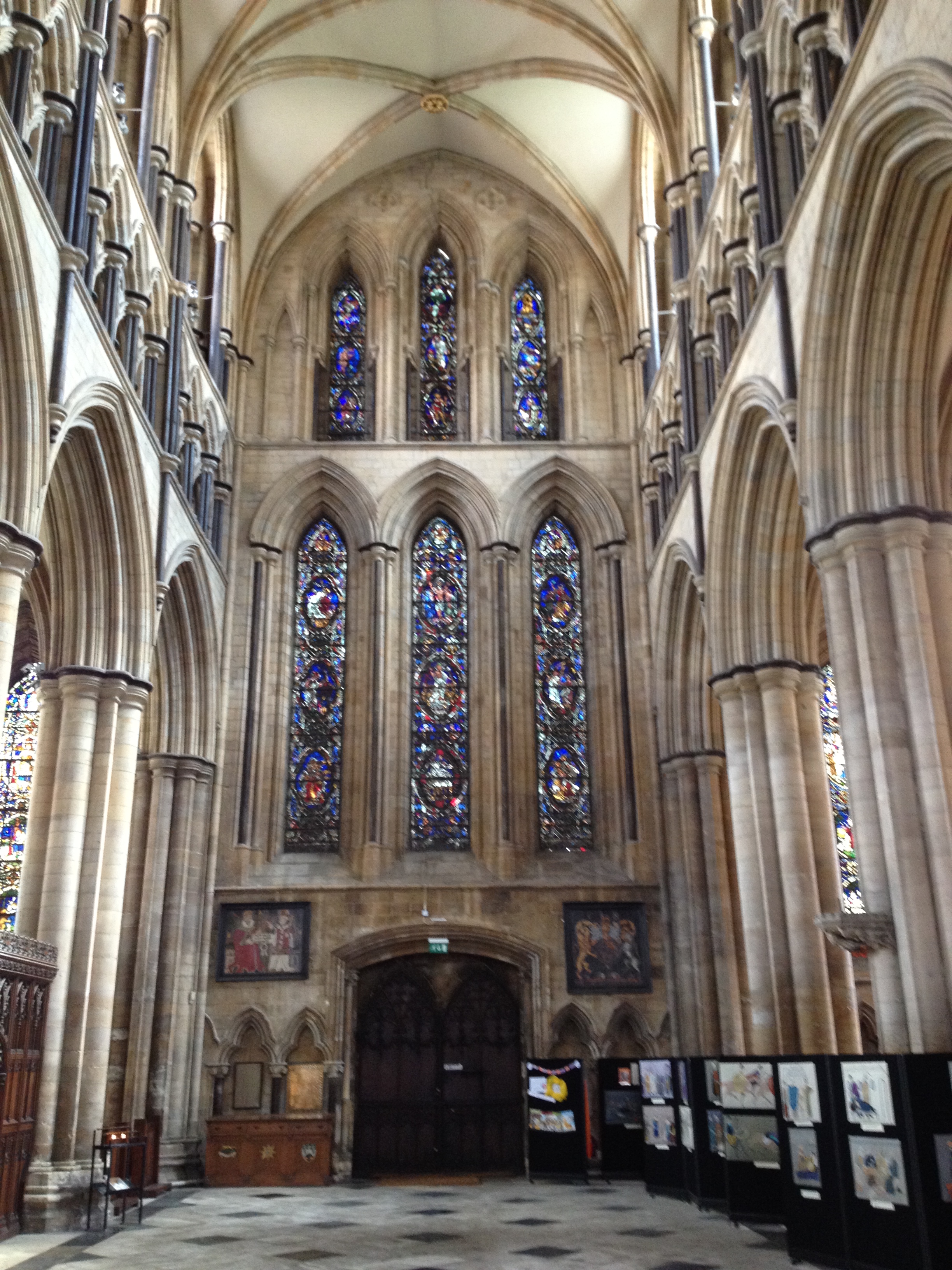
Today we got to visit the spectacular Beverley Minster—I think I liked it more than the York Minster. (The appendage of “minster” to a church name just means that it was a “teaching church”—there was a school attached.) Beverley is not, as I understand, a large town, though it is charming, so it’s a bit of a shock to find such a stunning and large church there. The church is so splendid because St John of Beverley, who was educated at Whitby by the Abbess Hild, founded a monastery nearby and is buried in the church, so it became a pilgrimage destination.
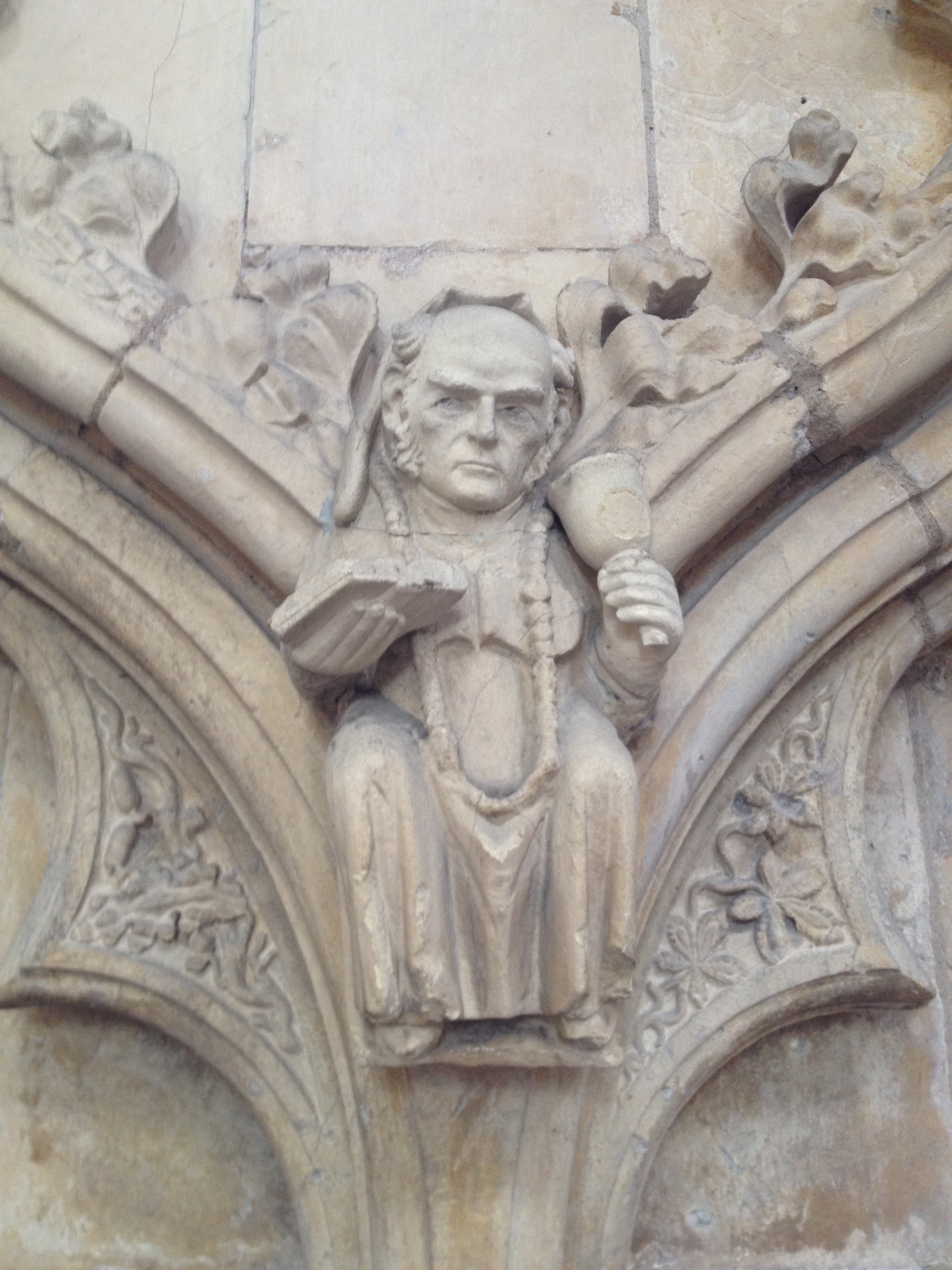
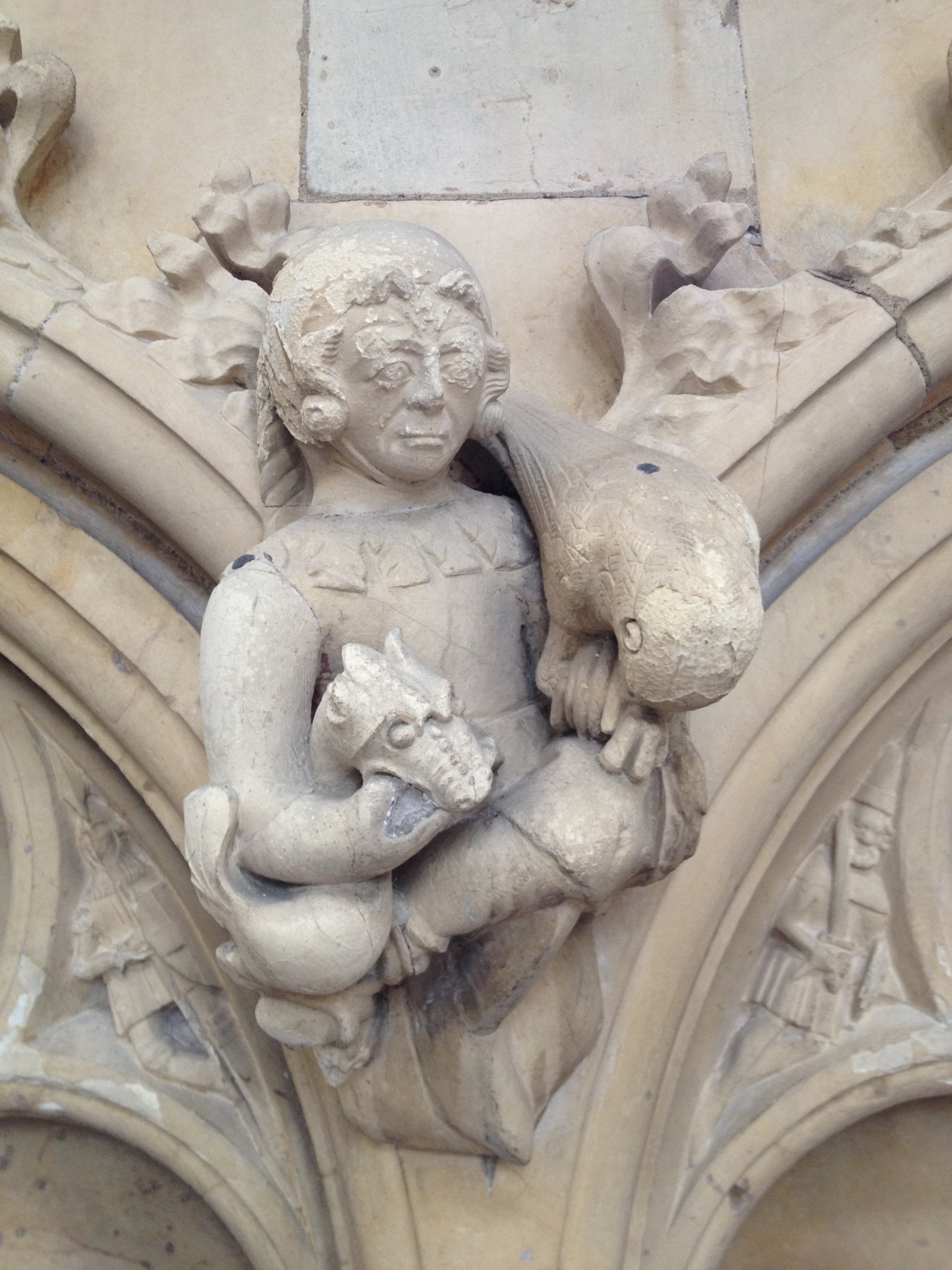
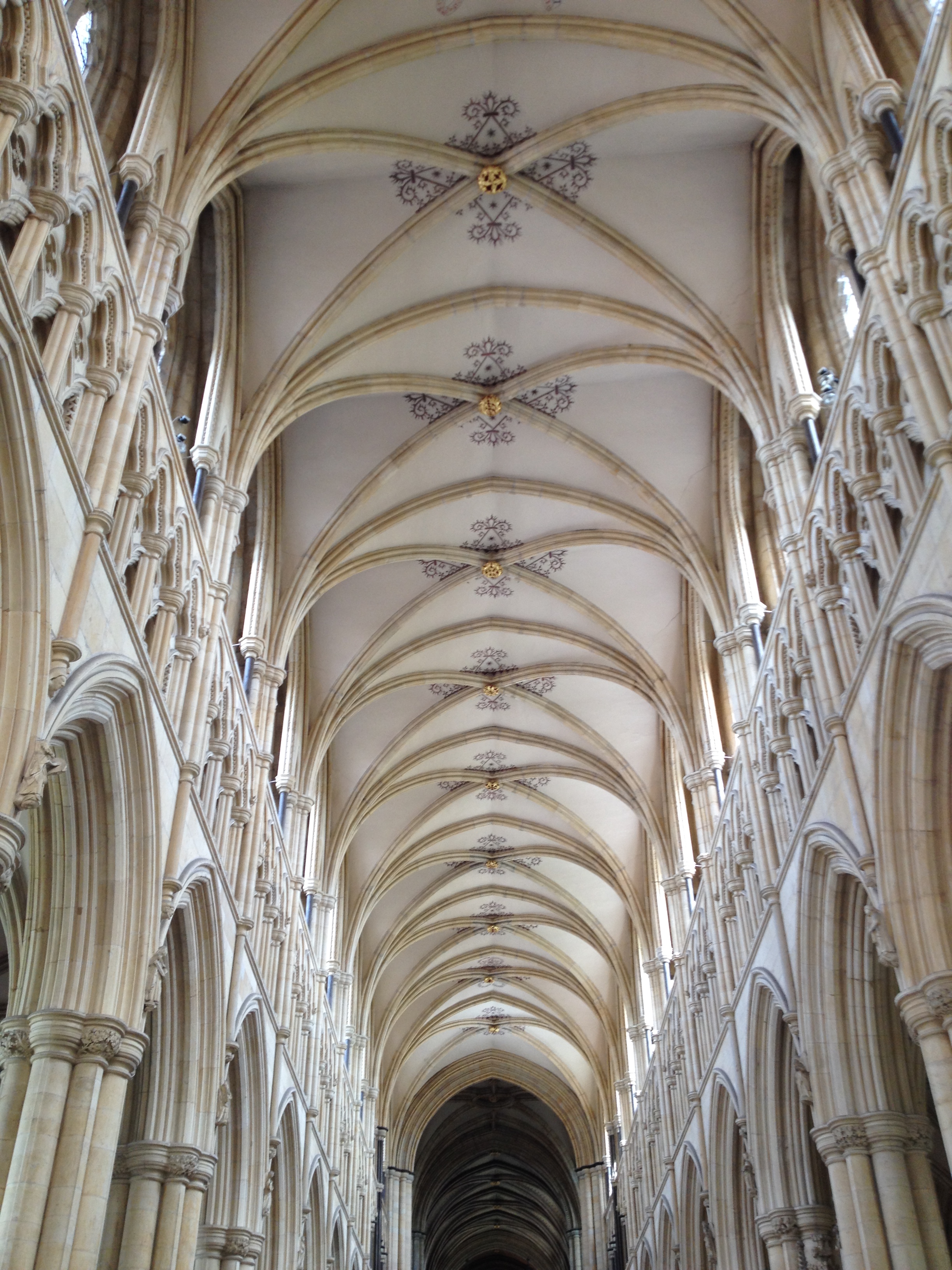
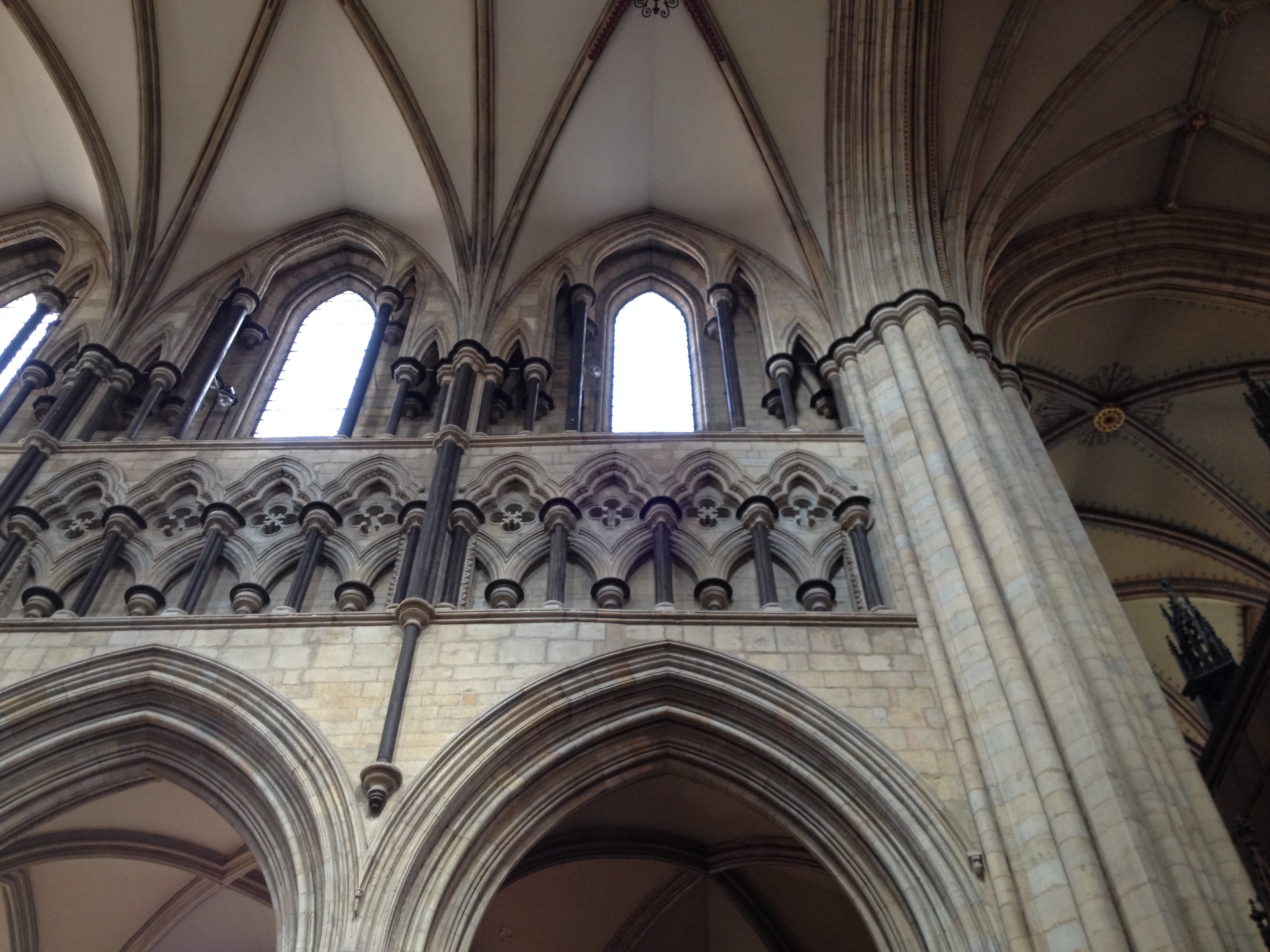
The outside of the church is striking because it contains so much statuary. (Most churches in England have very little statuary in or out, because the Protestants, and especially the seventeenth-century Puritans, were so zealous about taking it all down. So all over York Minster, you can see empty niches where statues would have stood.) At Beverley Minster, much of the statuary is new, but the feel of the church is still more medieval. They also had the most charming display of figures and heads, most of which seem to depict vices, on the south aisle—see my first three pictures.
The other super neat part of the church was the fact that we got to tour the towers. Beverley has an amazing tour guide named John, who has a lovely Yorkshire accent. He was christened and married in the minster; his daughter were christened and married there, and his granddaughters were christened there. So he has an investment in the building. At any rate, you have to climb 113 stairs to get up to the towers, and the stair case wraps around 7.5 times before arriving at the top. Here’s a picture of me before heading down! Per Heidi’s suggestion several years ago, I asked someone to come up behind me and leave me plenty of room so I didn’t get claustrophobic.
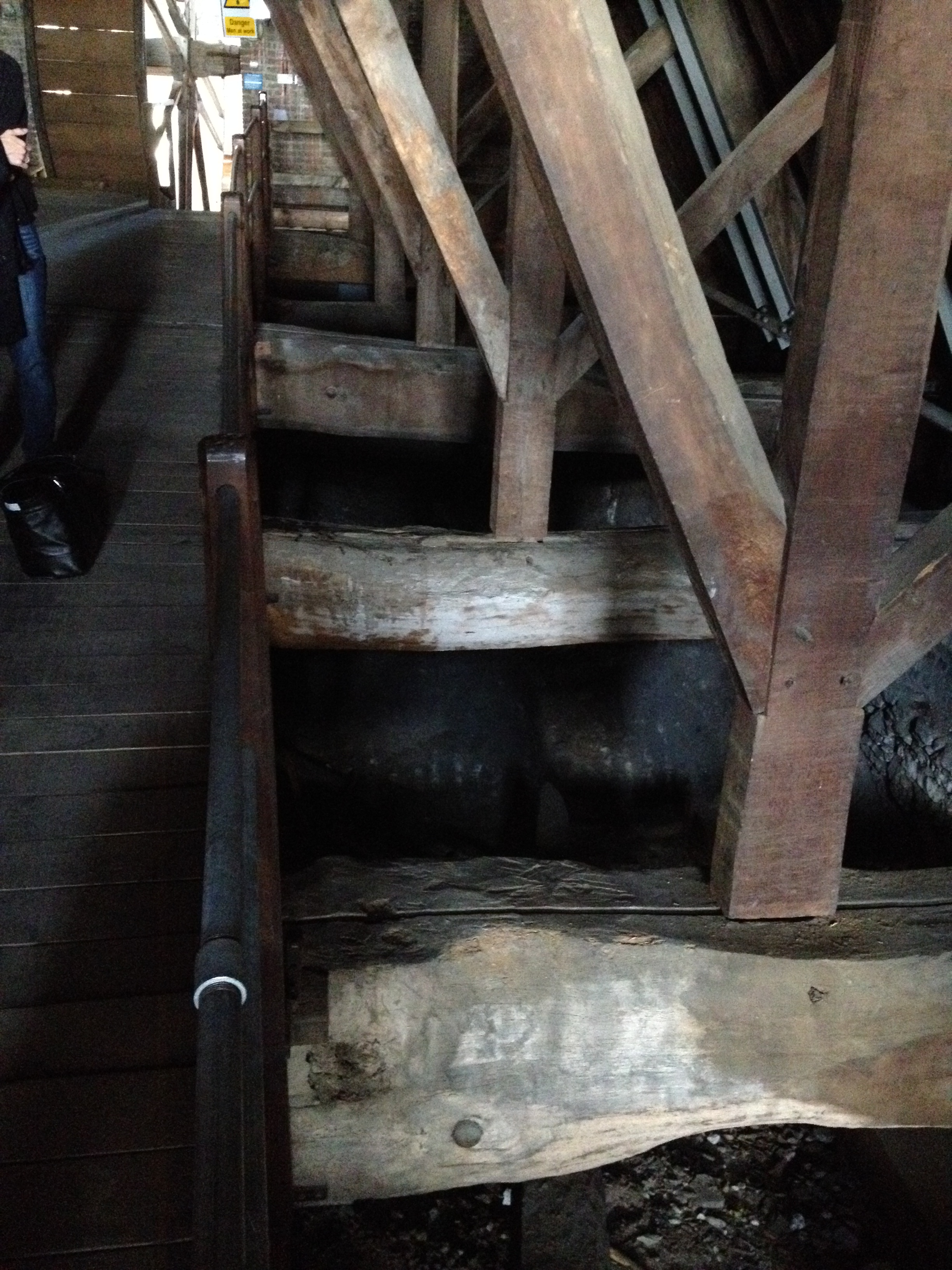
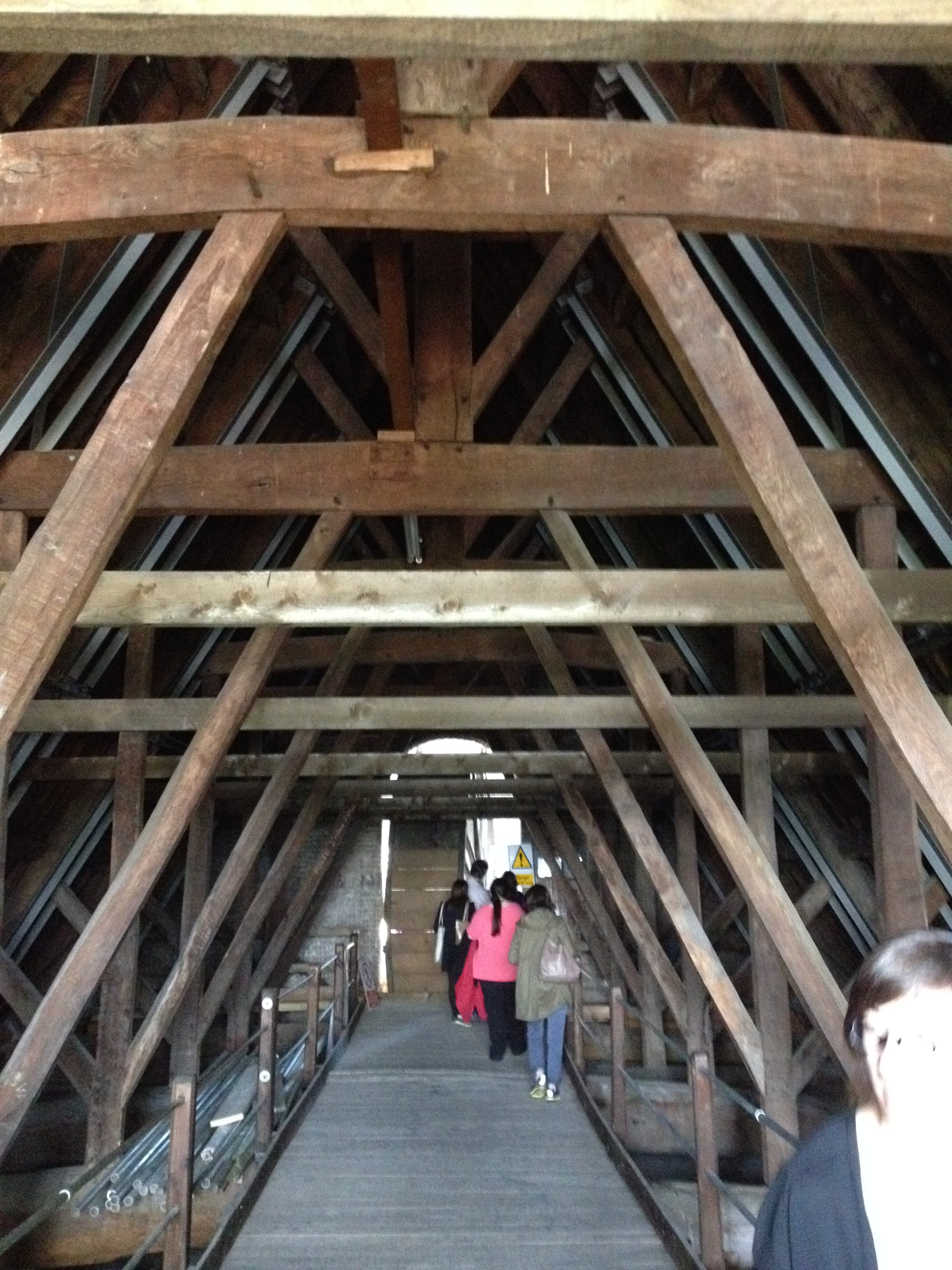
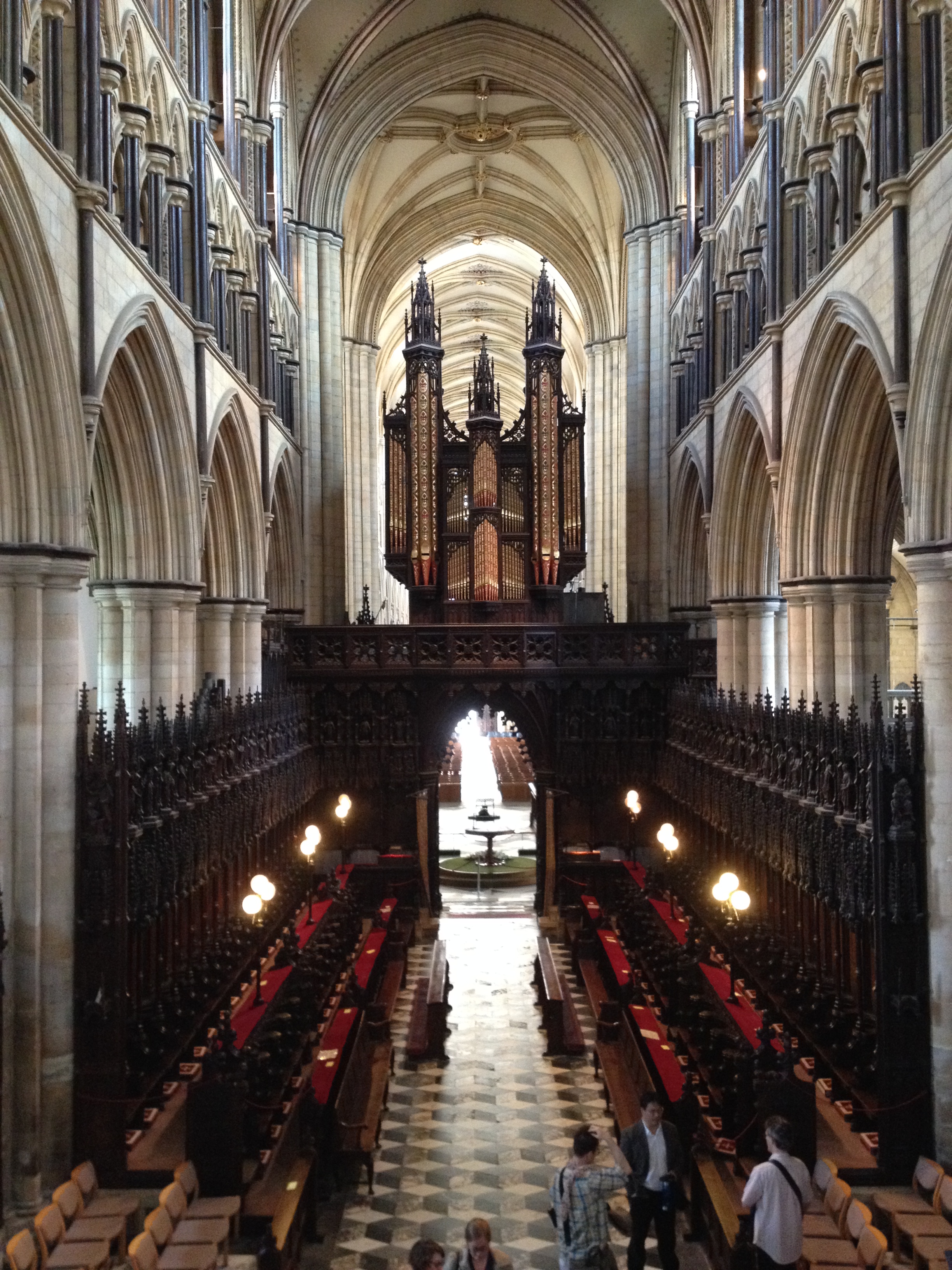
The climb up was totally worth it. The huge timber cross beams in the first picture were donated by Henry III in, I believe, 1348, to build the south tower. Crazy! You can see in my photo down the tower loft the timber structure, which has been reinforced in the last fifty years. The other amazing part was the giant hamster wheel! The wheel is the old-fashioned medieval way of raising pieces of the ceiling, such as the giant boss you can see in the next photo. (Bosses are the painted bits at the intersections of vaulting ribs. They don’t look that big from the ground, but as you can see here, they are quite large!) Through the hole in the roof where the boss was, we got to look down on the choir and the organ, and the floor looks 3D. From the tower, we also got to see how folks have, over the years, left graffiti on the window. My picture below isn’t as clear, but you can make out a plane—there’s an RAF base near the church, and the man who last put new glass in the window was working through the second World War.
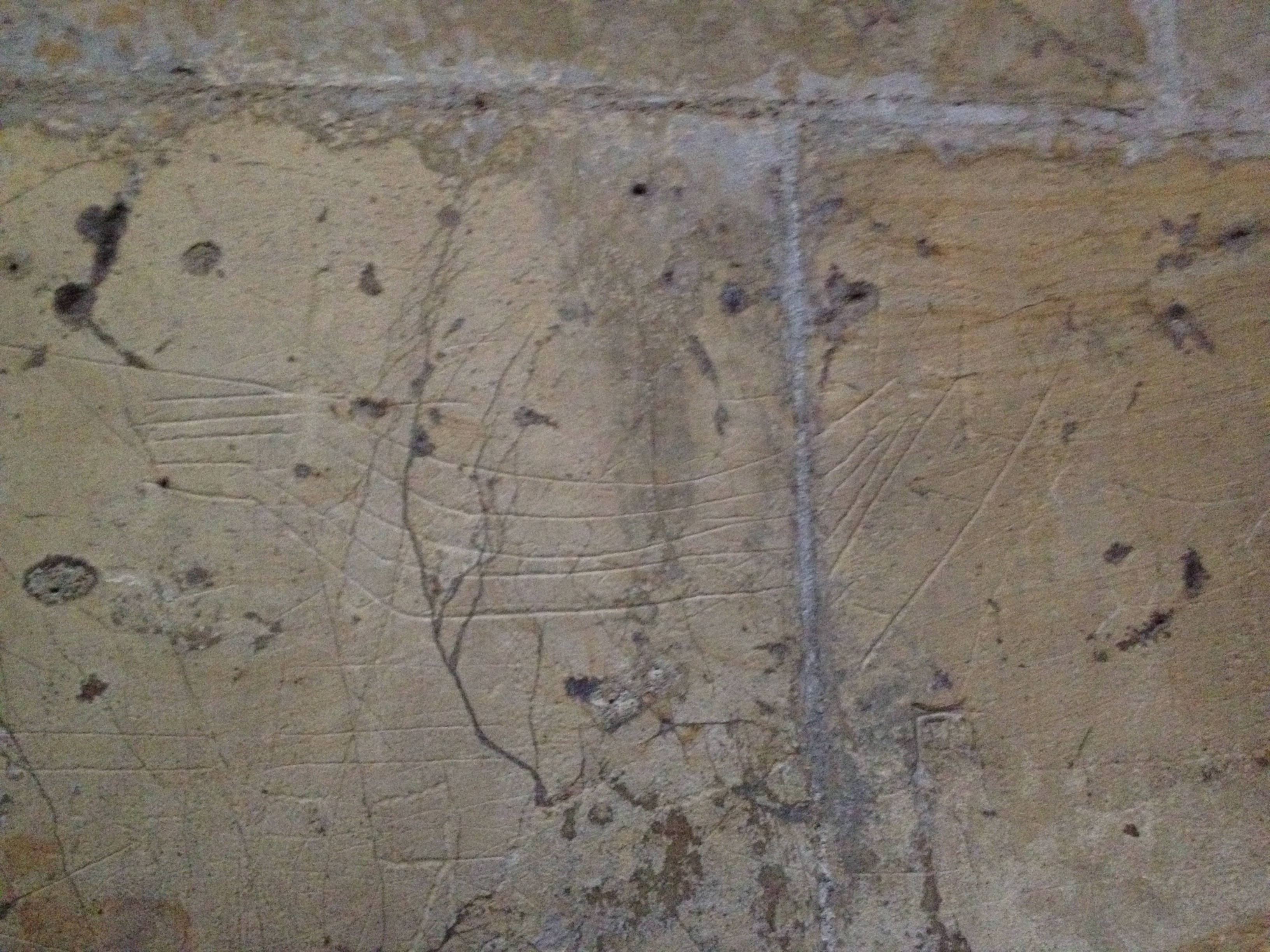
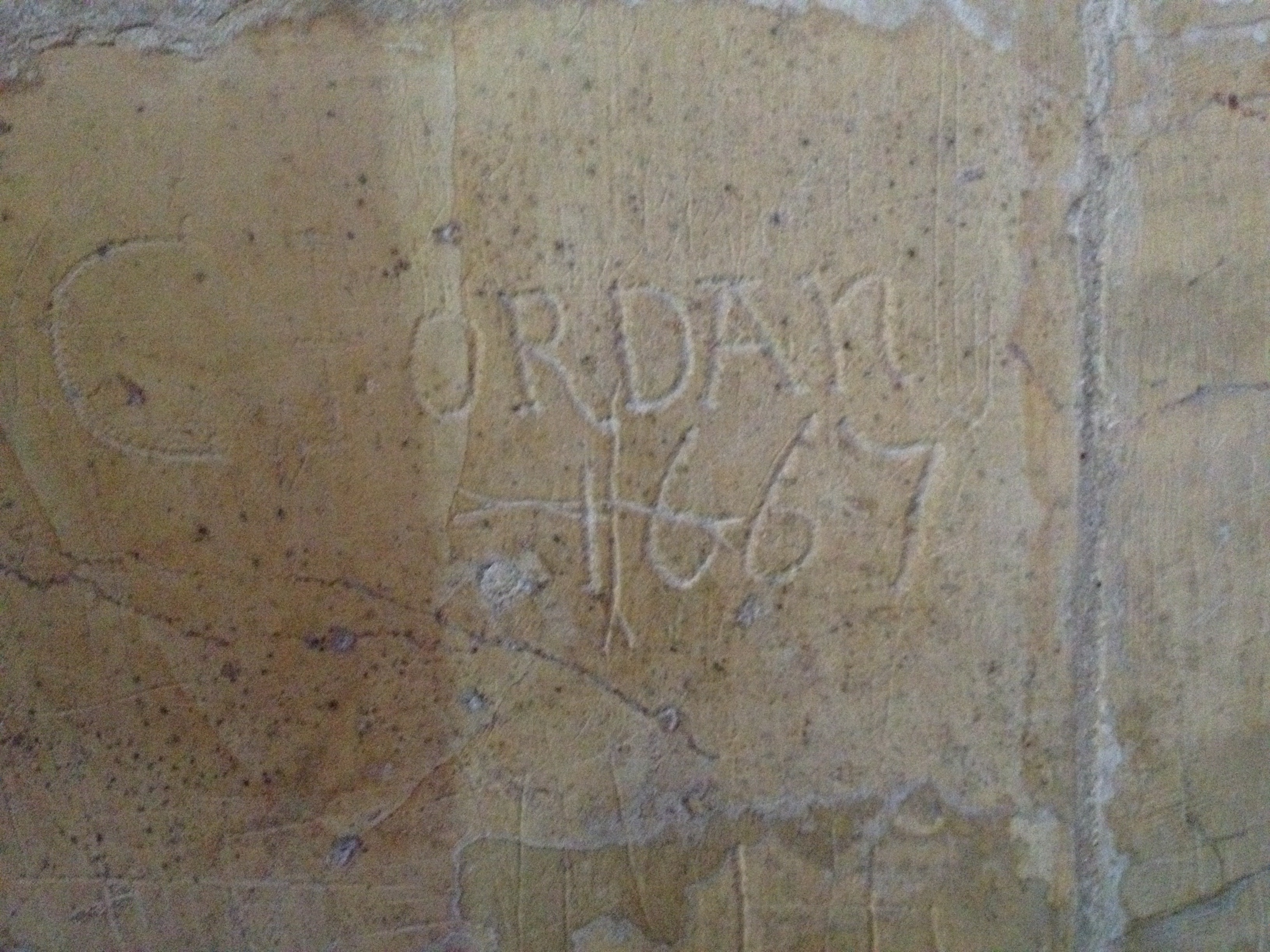
Speaking of graffiti…here’s some pilgrim graffiti! Pilgrims to the shrine of St John left these marks. There’s a cross and what was clearly meant to be a ship. They left these on the back side of the shrine—John (our tour guide) liked us so much, and was so delighted with our in-depth interest in the church, that he let us on top of the shrine! He said he hasn’t done something like that in fourteen years. The last photo is the one I took from up top.
After a long afternoon at the Minster, we headed into Beverley for dinner. We found a local pub that seemed to be the place to meet–everyone from family’s with young children to elderly couples to twenty somethings were eating there. The bartenders both looked to be about 17, and they were rather confused by the amount of detail in our questions about their beer. I had a Sneck Lifter from Jennings Brewery–the bartender told me it was an ESB, but it’s actually a dark strong ale.
Comments are closed, but trackbacks and pingbacks are open.